
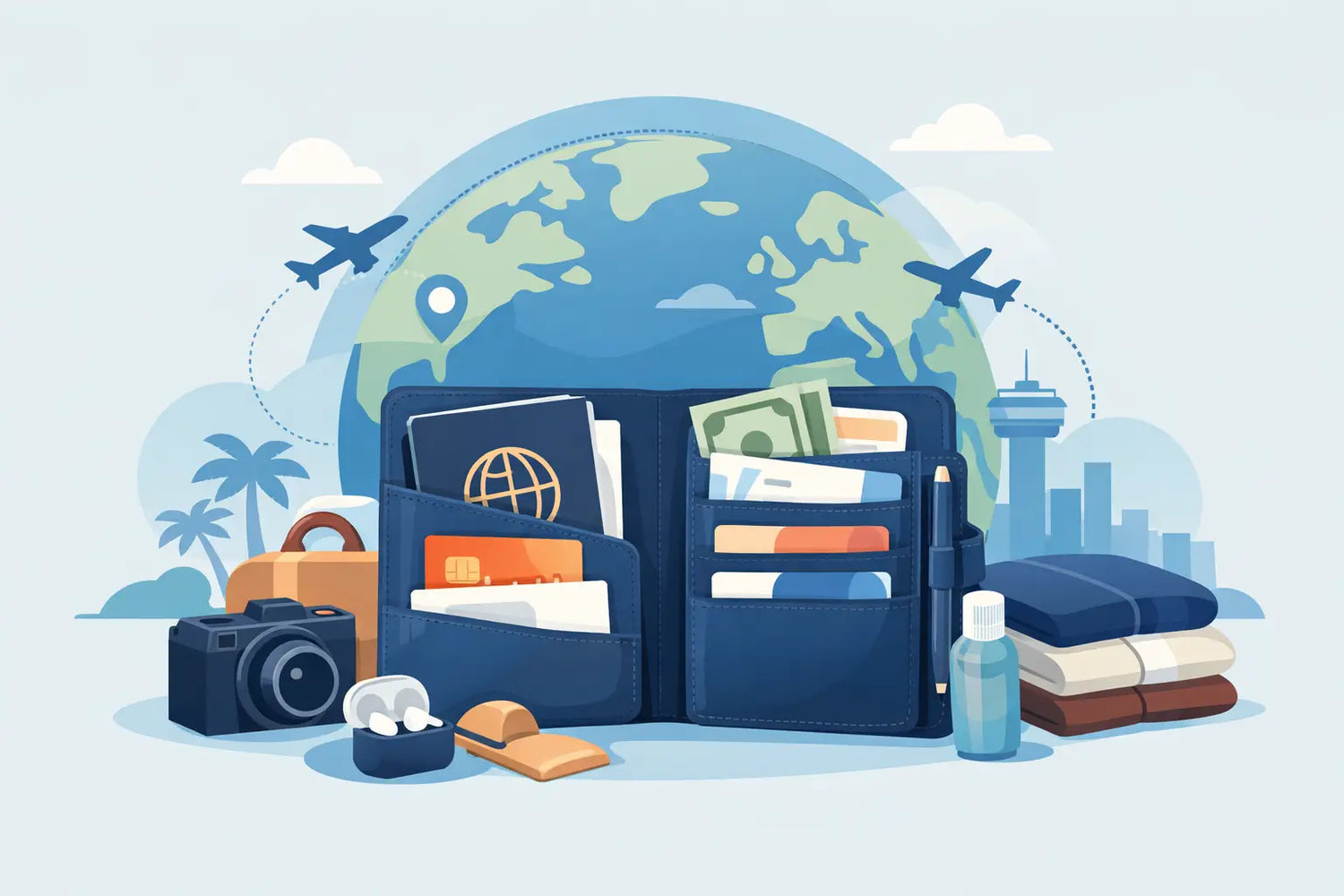
A passport wallet usually gets overpacked in the first five minutes. One extra receipt, a backup card you never use, a folded stack of foreign cash, and suddenly the whole point is gone. If you're wondering how to pack passport wallet essentials without turning it into a bulky catch-all, the answer is simple: carry what moves with you, not everything you own.
A well-packed passport wallet should feel light, fast, and deliberate. It should hold your travel core - the items you need at check-in, at security, at boarding, at arrival, and during the first 24 hours of a trip. That means fewer duplicates, cleaner organization, and a layout that lets you reach what matters without fumbling.
How to pack passport wallet without overstuffing it
Start by separating essentials from just-in-case items. Most travelers pack for anxiety, not reality. The result is a wallet stuffed with loyalty cards, old boarding passes, too much cash, and cards that never leave the slot.
Your passport wallet works best when every item inside has a clear job. Passport, primary payment cards, a sensible amount of cash, boarding pass or printed itinerary if needed, and any travel-specific small tools like a SIM card and ejector pin. That's the core. Everything else should earn its space.
The trade-off is straightforward. The more you try to store in one place, the less elegant and usable it becomes. A slim setup gives you quicker access and cleaner pockets, but it asks you to be selective. For most frequent travelers, that is a fair exchange.
Build around your travel flow
The smartest way to pack is to follow the order you use things.
At the front or quickest-access section, keep your passport and boarding pass. These are the documents you reach for repeatedly in the airport. If you bury them behind cash, receipts, and spare cards, every checkpoint becomes slower than it needs to be.
Next, place your primary payment cards. One main card and one backup is enough for most trips. A third card can make sense for international travel or business travel, but carrying five or six usually adds bulk without adding much security. If one card fails, you want one reliable alternative, not a stack.
Cash should stay flat and modest. Carry enough for transit, tips, and immediate arrival needs. Large wads of bills make a slim wallet lose its shape fast. If you're carrying multiple currencies, keep only the one you'll need first in the wallet and move the rest elsewhere until necessary.
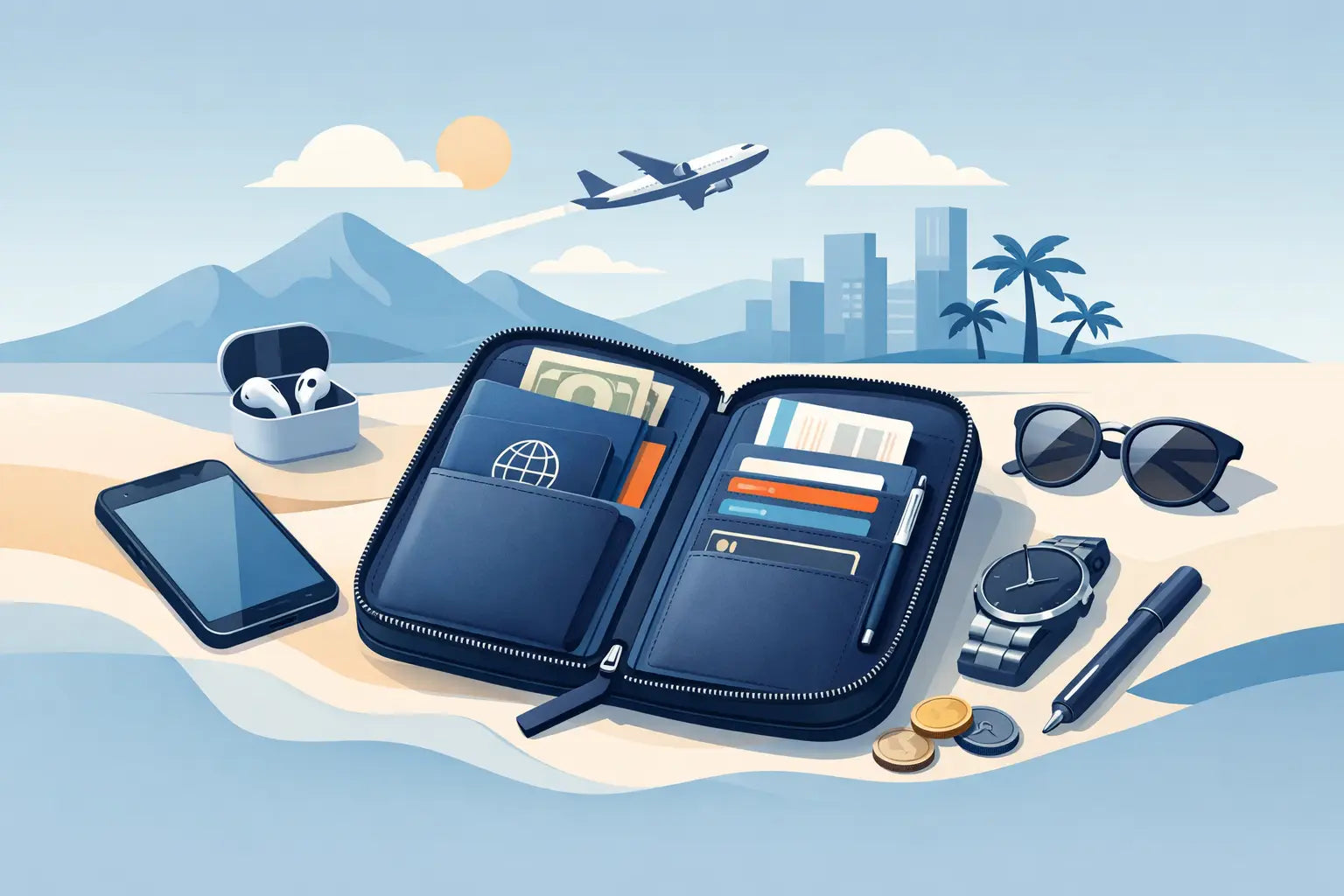
Then come the small travel extras. A spare SIM, SIM ejector pin, and mini pen are useful because they solve specific travel friction. The key is keeping them in dedicated slots so they don't shift around or scratch other items.
What should actually go inside
For most travelers, the ideal setup is tighter than expected. One passport is obvious. If you're traveling as a family and carrying multiple passports, capacity matters more, and you may need to balance convenience against thickness. A slim wallet can carry a surprising amount, but there is still a practical limit if you want it to stay pocket-friendly.
Beyond the passport, keep two to four cards max if you want the cleanest profile. That usually means a primary credit card, a backup card, a debit card if needed, and perhaps one ID. If your driver's license isn't needed during the trip, it doesn't automatically belong in the wallet.
Cash should be folded only if the design requires it. Flat storage is better when possible because it preserves the wallet's shape and makes bills easier to count. Receipts should be temporary, not permanent residents. If you pick one up during the trip, clear it out later that day.
Boarding passes are worth carrying physically if you're in airports where paper is still useful, your phone battery is low, or you're moving through multiple connections. If you rely fully on mobile boarding, the slot can be used for printed reservations, baggage tags, or hotel details instead.
How to pack passport wallet for international trips
International travel adds pressure because the wallet becomes more than a wallet. It becomes your command center.
That doesn't mean you should fill every slot. It means each slot should work harder.
Keep your passport in the easiest-access section. Add your main travel card, one backup card, and a small amount of arrival cash in the local currency if possible. A spare SIM card can be worth carrying if you're switching networks on arrival. The ejector pin matters more than people expect - until they're at the airport trying to open a SIM tray with a paper clip.
This is also where a mini pen earns its place. Immigration forms are less common than they used to be, but when you need one, you need one right then. A pen is one of those tiny details that feels unnecessary until it saves time.
If you're carrying copies of travel documents, keep them minimal. A printed hotel address or backup itinerary can help if your phone dies or service drops. But full printouts of every booking usually belong in your bag, not your pocket wallet.
The most common packing mistakes
The first mistake is treating a passport wallet like a regular everyday wallet plus extra storage. That usually creates duplicate items. If you're traveling with a dedicated passport wallet, edit your everyday carry and remove overlap.
The second mistake is packing for every possible problem. Travelers often carry too much cash, too many cards, and backup documents they never touch. Security matters, but overloading the wallet can make access worse and increase the chance that something important gets bent, buried, or misplaced.
The third mistake is ignoring how the wallet will be carried. If it needs to fit a jacket pocket, pants pocket, or compact personal bag, thickness matters just as much as capacity. A beautifully organized wallet that creates a visible lump or feels awkward during a long airport walk is not actually optimized.
The fourth mistake is poor slot logic. Keep high-frequency items together and low-frequency items out of the way. If your passport is behind receipts and your primary card is hidden behind foreign coins, the system is working against you.
Slim is better, but only if it stays usable
Minimalism can go too far. If your setup is so stripped down that you're constantly reaching into your bag for basics, you've packed too lightly. The goal is not to carry less at all costs. The goal is to carry the right amount in the right place.
That is why design matters. A slim passport wallet should not force compromise on essentials. It should let you carry passports, cards, cash, SIM tools, boarding passes, and a pen in a layout that still feels refined. That's the difference between simply being thin and being intelligently organized.
A premium leather wallet also changes how the experience feels day to day. It moves cleanly from airport use to everyday carry, which matters if you don't want a travel accessory that sits unused between trips. WhimHold is built around that exact idea - big on space, slim in your pocket, and polished enough to use well beyond takeoff.
A practical packing setup that works
If you want a reliable template, think in layers of access. Your first layer is passport and boarding pass. Your second is primary card, backup card, and ID if needed. Your third is flat cash. Your fourth is small tools like a SIM card, ejector pin, and mini pen.
That order keeps the wallet intuitive. The things you reach for most are quickest to access, and the things you need less often stay secure without getting in the way. It also keeps the overall profile flatter because you're not stacking thick items on top of each other randomly.
Before you leave, do one final edit. Remove receipts, expired cards, and anything you added "just in case" but can't justify. Then test the wallet in the pocket or bag you actually plan to use. If it feels heavy, bulky, or awkward now, it will feel worse in a terminal.
A passport wallet should reduce friction, not carry it. Pack it with intention, keep it slim, and every handoff - from check-in to arrival - gets a little cleaner.

Leave a comment
This site is protected by hCaptcha and the hCaptcha Privacy Policy and Terms of Service apply.