
Airport security is where a bad wallet shows itself fast. You are juggling a passport, boarding pass, payment card, and maybe a SIM tool - and suddenly the bulky organizer that looked useful at home feels slow, awkward, and overbuilt. A smart guide to choosing travel wallet starts there: not with how much a wallet can hold, but with how efficiently it lets you move.
The best travel wallet is not the biggest one. It is the one that keeps your core essentials together, stays slim in your pocket or bag, and gives you quick access when travel gets hectic. For most modern travelers, that means less like a zip-around folio and more like a compact, highly organized everyday carry piece that works just as well after landing.
What a travel wallet should actually solve
A travel wallet has one job: reduce friction. It should keep passports, cards, cash, and small travel items organized in one place without making you carry a brick. If it adds bulk, slows access, or forces you to dig for basics at the gate, it is solving the wrong problem.
This is where many buyers get distracted by capacity alone. Extra slots and oversized compartments can sound appealing, but every added layer increases thickness. In practice, most travelers reach for the same few items repeatedly - passport, payment cards, ID, some cash, and boarding details. A better wallet is designed around those habits, not around the idea of carrying everything just because you can.
A guide to choosing travel wallet size
Start with footprint and thickness. A wallet can be beautifully made and still be too bulky for real travel. If it only works in a backpack or tote, it may not fit how you move through airports, taxis, hotels, and city streets.
Slim matters because travel already adds enough to your carry. Phone, keys, earbuds, charger, passport - every item competes for pocket space. A travel wallet should consolidate essentials without becoming one more oversized object. The sweet spot is a design that fits a passport and supporting items in a compact profile, so it feels secure and portable rather than cumbersome.
There is a trade-off here. Ultra-compact wallets demand more disciplined packing. If you want to carry multiple currencies, several receipts, two passports, and backup cards for a family, you may need more volume. But if you travel solo or as a couple and value speed, a slimmer format usually performs better where it counts.
Prioritize access over storage
The most useful feature in a travel wallet is not another hidden pocket. It is fast, intuitive access.
Think about the moments that matter. At check-in, you want your passport immediately. At immigration, you may need a boarding pass and arrival card. At a café after landing, you want a payment card without exposing every document you carry. Good design makes those actions feel simple.
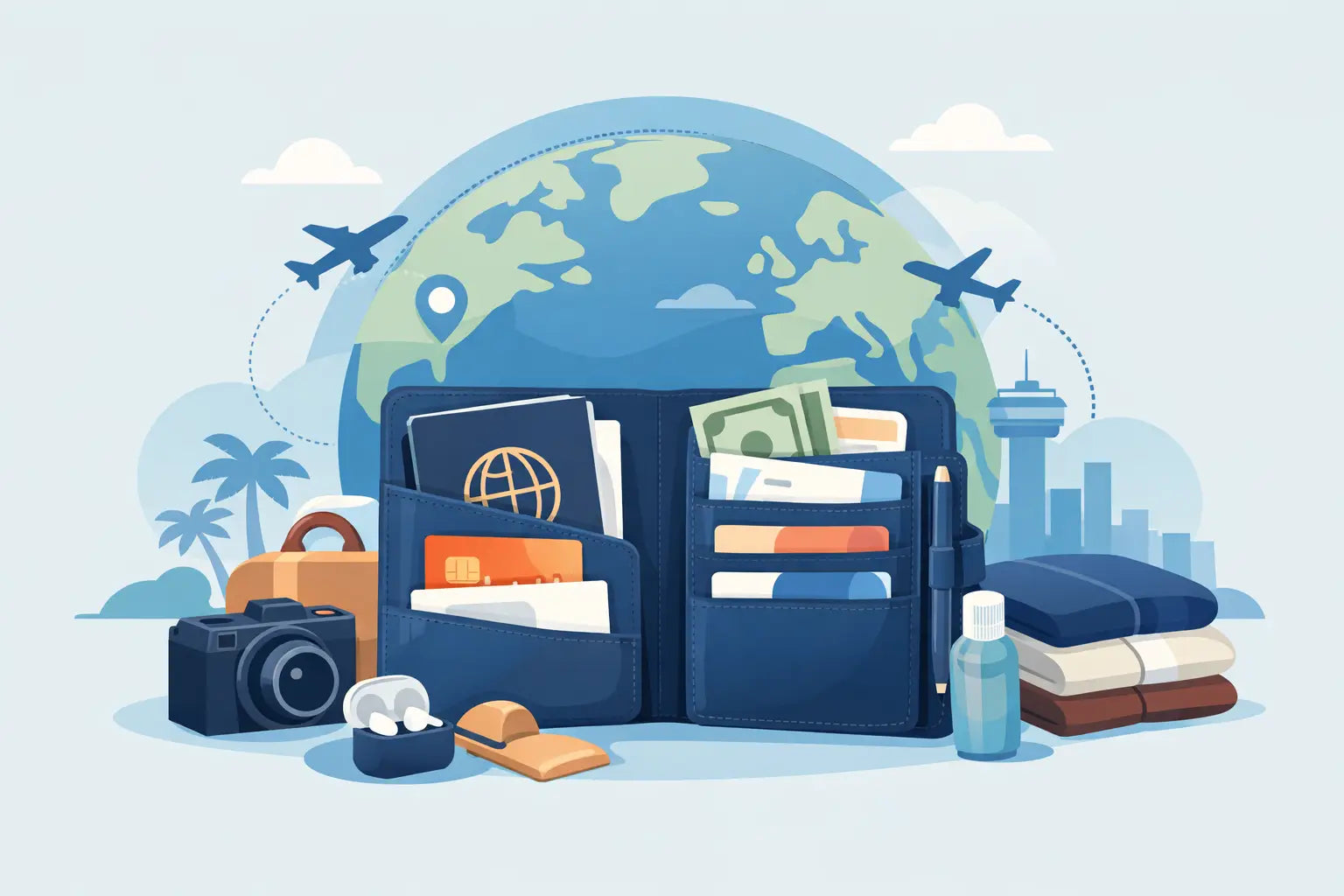
Look for a layout that separates essentials clearly. Passport storage should feel secure but easy to reach. Card slots should hold cards firmly without making removal clumsy. Cash should fit neatly without requiring awkward folds. If you travel internationally, dedicated storage for a SIM card and a SIM ejector pin can be surprisingly useful. These are small details, but they remove real friction.
A mini pen slot can also earn its place. That sounds minor until you are filling out forms with nothing on hand. The best travel wallets are not packed with gimmicks. They include the small functional touches that travelers actually use.
Material matters more than people think
A travel wallet gets handled constantly. It is pulled from pockets, bags, trays, jacket compartments, and hotel safes. The material needs to look refined, feel good in hand, and hold its shape under daily pressure.
Cheap synthetic materials can look acceptable online and disappoint quickly in use. They tend to feel stiff, wear poorly at stress points, or add unnecessary thickness. Premium leather, especially soft and durable full-grain or high-quality Nappa leather, gives a different experience. It is smoother, more flexible, and often better suited to a slim construction because it can combine structure with a lighter feel.
That said, leather is not automatically better if the design is overbuilt. Thick padding, heavy linings, and excessive reinforcement can turn premium material into a bulky product. The better question is whether the material supports the wallet’s purpose: slim profile, long-term durability, and a polished finish that works beyond the airport.
Don’t buy a travel-only wallet if you can avoid it
One of the easiest mistakes is choosing a wallet that only makes sense on travel days. Large zip cases and oversized passport holders often sit in a drawer between trips because they are too bulky for everyday use.
A smarter choice is a wallet that works before takeoff, during the trip, and after you get home. That means it should carry your daily cards and cash comfortably, with the passport compartment ready when needed. This kind of crossover design gives you more value and makes travel prep easier because your system is already in place.
That is also why minimalism matters. When a wallet is slim enough for daily carry, you are more likely to keep it organized. You know where your essentials are. You are not assembling a separate travel kit at the last minute.
Security should feel built in, not bulky
Security is part of any guide to choosing travel wallet, but it is often framed badly. More zippers, more closures, and more compartments do not automatically make a wallet safer. In some cases, they simply make it slower and more noticeable.
Real security comes from control. A wallet that stays close to the body, slips easily into a front pocket or secure jacket pocket, and lets you access essentials quickly is often safer than a large organizer you keep in a bag. Bulk can make a wallet harder to conceal and easier to fumble.
This is where slim design has a practical edge. It encourages closer carry and easier handling in crowded spaces. If RFID-blocking features matter to you, they can be useful as an added layer, but they should not be the main reason to choose a wallet. Layout, portability, and ease of use will affect your travel experience more often.
Pay attention to what you really carry
Before you buy, take inventory of your actual loadout. Not your worst-case loadout. Your real one.
Most travelers need one passport, two to six cards, some folded bills, and maybe a boarding pass, SIM card, or hotel key. If that sounds familiar, choose a wallet built around that setup. If you regularly carry family passports or printed itineraries, your needs are different. The right choice depends on your travel pattern, not on the broadest feature list.
This is also where design discipline shows. A well-planned slim wallet can hold more than expected if every compartment is intentional. Efficient storage beats empty volume. You want maximum utility per millimeter, not wasted space dressed up as versatility.
What premium design looks like in practice
Premium is not just a nicer finish. It is the feeling that every detail has been edited down to what is useful.
Edges should be clean. Stitching should feel precise. Slots should be snug without fighting you. The wallet should close or fold naturally without bulging when loaded with normal essentials. In hand, it should feel elegant, not fragile. In use, it should feel efficient, not precious.
This is the difference between a product that photographs well and one that travels well. The best pieces combine visual restraint with practical confidence. They look refined at a hotel check-in desk, but they are really built for speed, access, and pocket comfort.
A wallet like that does not ask you to choose between form and function. It gives you both in a tighter footprint. That balance is exactly why many modern travelers are moving away from oversized organizers and toward slimmer passport wallets designed with everyday carry in mind.
The best choice is the one you keep using
If a travel wallet is too thick, too complicated, or too specialized, you will stop reaching for it. The right one earns a permanent place in your routine because it makes movement easier. It keeps your essentials together, stays slim under pressure, and looks as considered as the rest of your carry.
If you are comparing options, lean toward the wallet that does more with less. That is where thoughtful design wins. And if you find one that offers serious storage in a pocket-friendly profile, premium leather, and space for the travel details people usually forget, you are looking at the right kind of upgrade.
The best travel gear does not ask for attention. It simply makes every transition feel cleaner, faster, and more controlled.

Leave a comment
This site is protected by hCaptcha and the hCaptcha Privacy Policy and Terms of Service apply.