
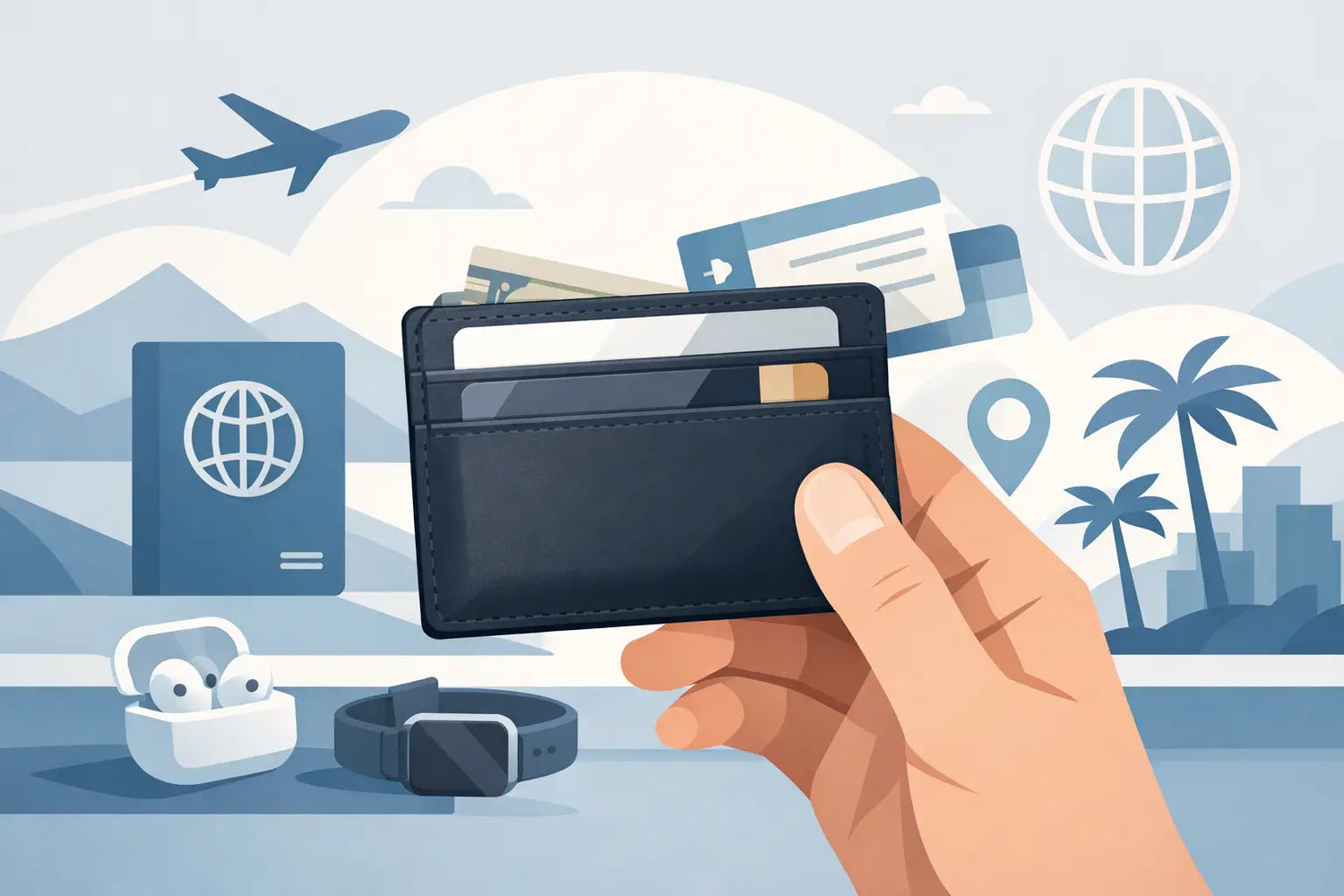
Missed boarding passes, bent passports, loose SIM cards, and a wallet that feels more like a brick than a pocket essential - that’s usually what pushes people toward a minimalist travel wallet. Not because they want less for the sake of less, but because they want the right things in one place, easy to reach, and slim enough to carry without thinking about it.
That distinction matters. A good travel wallet is not about stripping down until it becomes inconvenient. It’s about removing bulk while keeping the pieces that actually make travel smoother. When the design is right, a slimmer wallet doesn’t mean sacrificing function. It means every slot, sleeve, and compartment earns its place.
What makes a minimalist travel wallet different
Traditional passport wallets often solve one problem by creating another. Yes, they hold everything. They also become oversized, overbuilt, and awkward to carry once they’re filled. Many are better suited to being stored in a tote than slipped into a jacket pocket or personal item.
A minimalist travel wallet takes a different approach. Instead of adding more layers, more zippers, and more padding, it focuses on efficient organization. The goal is simple: keep passports, payment cards, cash, boarding passes, and small travel tools together in a format that stays compact in real use.
That last part is where many products fall short. Plenty of wallets look slim when empty. The test is what happens after you add the items you actually travel with. If it bulges the moment you insert a passport and a few cards, it isn’t truly minimalist. It’s just underbuilt.
The best designs balance capacity and profile. They hold the essentials without forcing you to choose between being organized and being comfortable.
Why slim matters more than people think
Bulk has a way of multiplying during travel. A thick wallet presses against your pocket while you’re seated, catches when you reach for it at security, and competes for space in already packed bags. It also makes quick access harder, especially when you’re juggling a phone, coffee, carry-on, and ID in a crowded terminal.
A slimmer wallet changes the feel of travel in small but noticeable ways. It slides into a front pocket more comfortably. It fits cleanly into a blazer, crossbody, or compact carry-on pocket. It feels less like another item to manage and more like part of your everyday carry.
That’s the real appeal. A minimalist travel wallet should work beyond the airport. If it only comes out a few times a year for international trips, it’s less useful than it could be. The strongest designs transition easily between travel days and normal routines, carrying cards and cash with the same low-profile ease.
What to carry in a minimalist travel wallet
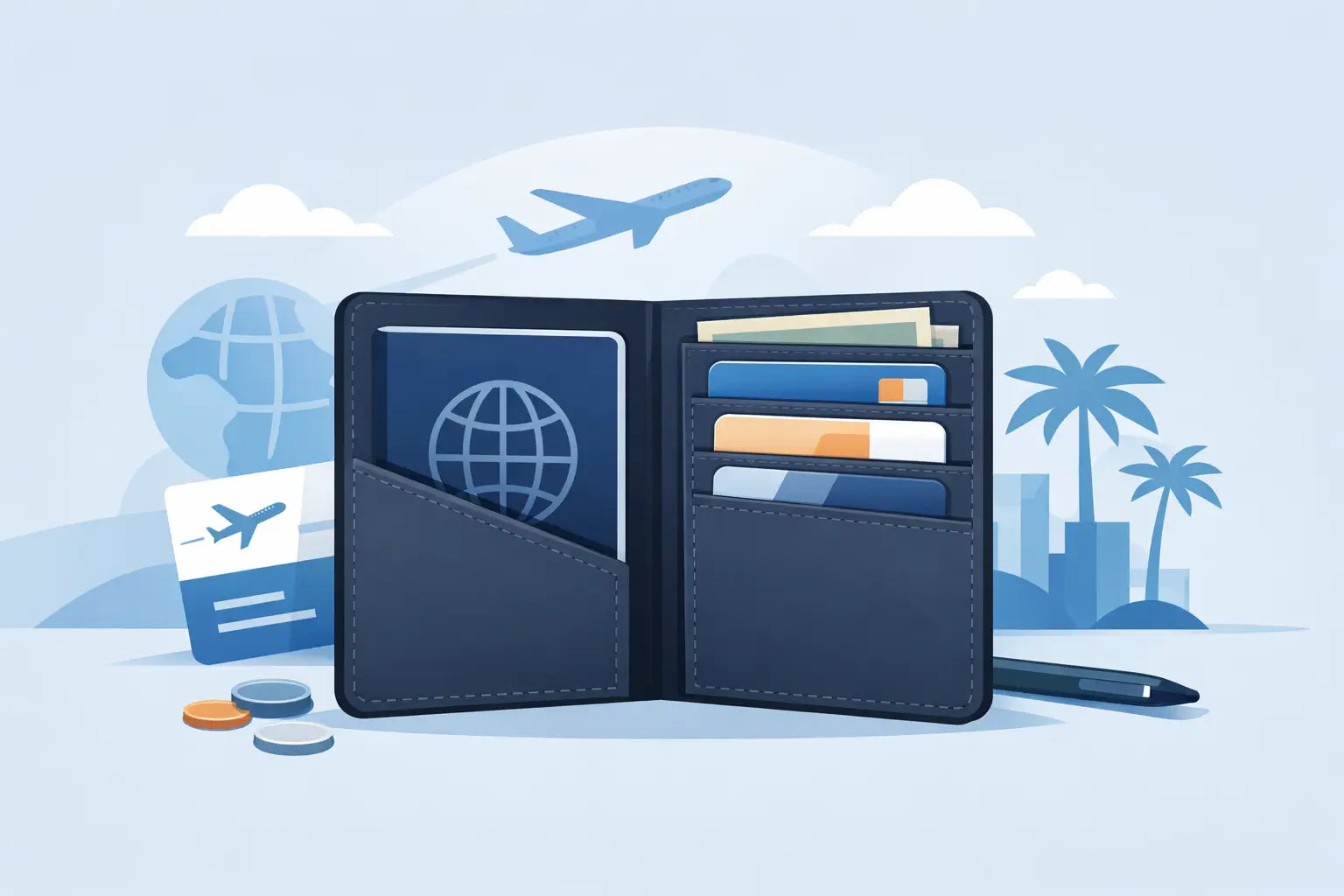
The right setup depends on how you travel, but most people need less than they think. For a domestic trip, that may mean payment cards, ID, cash, and a boarding pass. For international travel, add your passport, a spare SIM, and a SIM ejector pin. Some travelers also want room for a mini pen, which becomes unexpectedly useful when customs forms or quick notes still show up.
What you probably do not need is every loyalty card, old receipt, backup card you never use, and coins from three previous trips. Minimalism works best when the contents are edited with intention. The wallet should support that discipline, not encourage clutter.
A smart layout helps here. Dedicated spaces for cards, a clean passport sleeve, a cash compartment that doesn’t create thickness, and a place for tiny travel-specific items make a big difference. When everything has a home, you spend less time checking pockets or emptying your bag at the worst possible moment.
The trade-off: compact vs. overstuffed
There is a limit to what any slim wallet can do. If you want to carry two passports, eight cards, coins, receipts, hotel keycards, several paper documents, and a charger cable, even the best minimalist design will start to feel strained. That is not a flaw so much as a mismatch between product and use case.
This is where honest expectations matter. A minimalist travel wallet is ideal for travelers who value fast access, pocket comfort, and a cleaner carry system. It is less ideal for someone who treats their wallet like a catch-all pouch.
The good news is that most modern travelers benefit from trimming down. Mobile boarding passes reduce paper. Tap-to-pay reduces the need for cash. E-visas and digital confirmations reduce document load. What remains are a few critical items that deserve a better home than random pockets.
Materials matter more than marketing
Slim design is only convincing when the materials support it. Cheap synthetic materials can feel stiff, thick, or flimsy all at once. They may crease awkwardly, wear quickly at the edges, or add unnecessary structure that works against a compact profile.
Premium leather changes the experience. A soft, refined leather like Cow Nappa offers a more flexible hand feel, better pocket comfort, and a cleaner finish. It looks elevated, but more importantly, it performs well in a product that needs to stay thin while holding essentials securely.
That said, leather is not automatically superior in every case. Some travelers prefer highly water-resistant technical materials or vegan alternatives. The right choice depends on priorities. If you care about a polished appearance, tactile quality, and everyday versatility, premium leather remains hard to beat.
How to choose the right minimalist travel wallet
Start with your actual travel behavior, not an idealized version of it. Think about what you reach for most often: passport, primary card, cash, boarding pass, SIM tool. If those items can be stored in a way that feels intuitive, you’re on the right track.
Then look at dimensions in real terms. “Slim” is an easy claim to make, so pay attention to whether the wallet is designed to remain compact when filled. A product with strong storage efficiency should hold the essentials without turning into a pocket-shaped block.
Access also matters. If getting your passport out requires wrestling with a tight sleeve, or if your boarding pass has to be folded into quarters, the design is working against you. Travel creates enough friction on its own. Your wallet should remove it.
Finally, consider whether it fits your style off the plane. The best option is one you’ll actually carry. If it feels too technical for dinner, too bulky for daily use, or too precious to handle often, it may not become the staple you want.
Minimalist travel wallet design for real trips
The strongest product designs are specific. They account for the small frustrations travelers run into repeatedly: where to place a SIM ejector pin so it does not disappear, how to store a spare SIM card without improvising, how to carry a mini pen without adding thickness, and how to keep boarding passes accessible instead of crumpled.
These details separate a well-designed travel wallet from a generic slim wallet that simply happens to fit a passport. Purpose-built organization matters because travel involves more than cards and cash. The best products recognize that and still stay compact.
This is exactly why a premium, ultra-slim format stands out. When a wallet manages to fit passports, payment cards, cash, boarding passes, SIM accessories, and a pen while staying elegant and pocket-friendly, it solves the central tension of travel carry: capacity without bulk.
For travelers who want that balance, WhimHold’s approach makes sense. The focus is not on adding more wallet. It’s on fitting more utility into less space.
Who benefits most from going minimalist
Frequent flyers feel the payoff fastest because repetition magnifies friction. If you move through airports often, every extra second spent searching for documents becomes annoying. A cleaner setup saves time and reduces those small, cumulative frustrations.
Business travelers also benefit because presentation matters. Pulling a slim, organized wallet from your jacket or carry-on feels more composed than digging through loose papers and cards. It’s practical, but it also fits a more refined travel style.
Leisure travelers should not overlook it either. Even if you only take a few trips a year, fewer moving parts make the experience better. And because a well-designed minimalist travel wallet can work as part of your everyday carry, it earns its keep between trips too.
If your current setup feels bulky, messy, or annoying every time you reach for it, that’s usually the sign. You do not need a bigger wallet. You need a better edited one.
A travel essential should make you feel lighter, not more loaded down. When it keeps the right items close, organized, and out of the way, you notice the trip more and the clutter less.

Leave a comment
This site is protected by hCaptcha and the hCaptcha Privacy Policy and Terms of Service apply.