You notice the missing pen at the worst possible moment - standing at a customs counter, filling out a form on a shaky tray table, or lending yours away just before you need it. That small annoyance is exactly why a passport wallet with pen holder makes more sense than it first appears. It solves a minor problem that shows up at major travel moments, and when it’s built well, it does far more than carry a pen.
The real question is not whether a pen loop sounds useful. It’s whether the whole wallet stays slim, organized, and practical once that feature is added. For frequent travelers, that distinction matters. A travel wallet should reduce friction, not create a thicker version of the problem you already have in your pocket or bag.
What a passport wallet with pen holder should actually do
A good travel wallet is not a storage bin. It is a control center for the few things you reach for repeatedly: your passport, payment cards, boarding pass, cash, and the small travel items that somehow always get separated right when you need them. A pen holder earns its place when it supports that system without adding bulk.
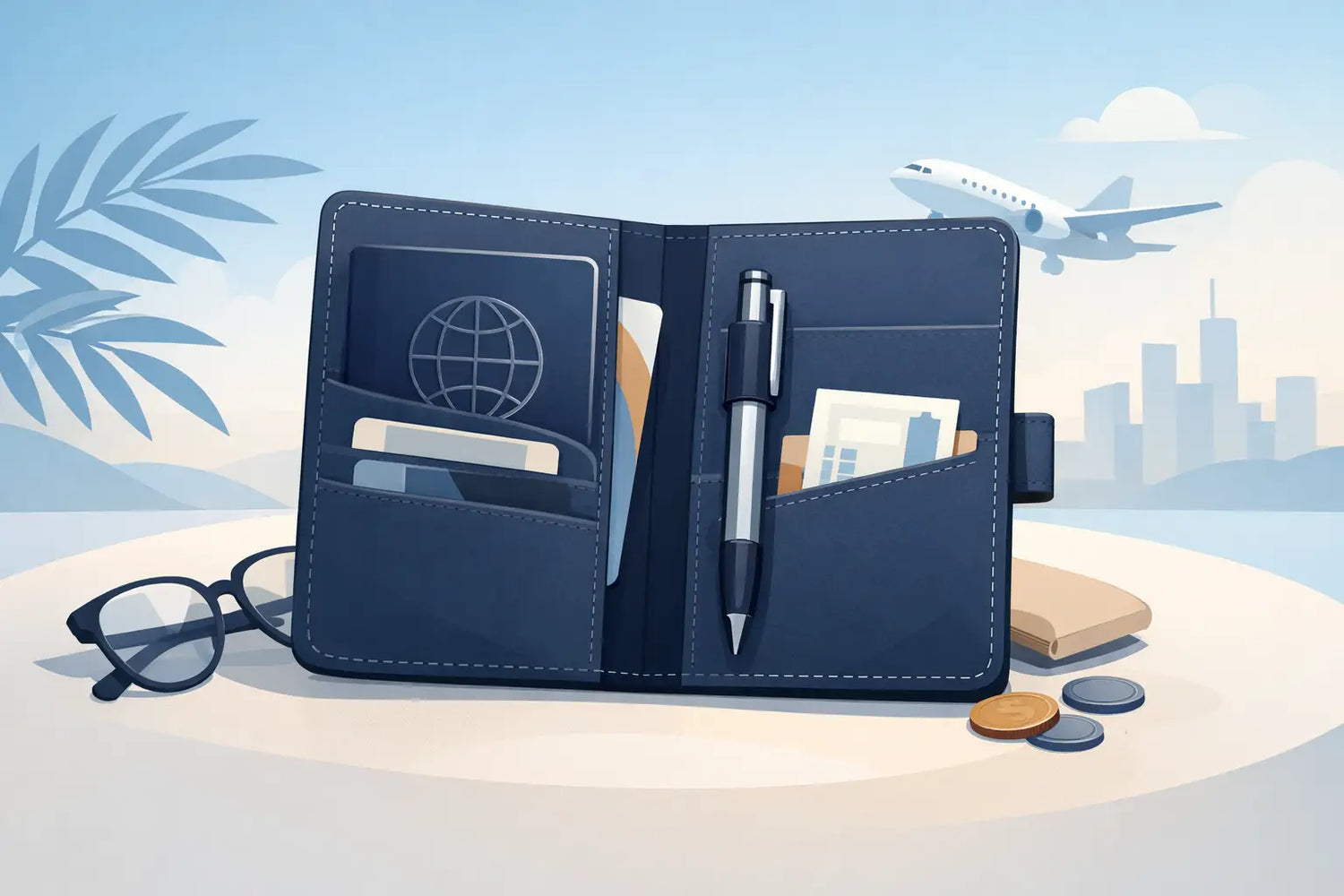
That means the best designs keep the pen secure, tight to the profile, and easy to access. If the pen loop sticks out, stretches over time, or forces the wallet to bulge, the feature works against the product. If it accommodates a compact pen cleanly, it becomes one of those details you stop thinking about because it simply works.
This is where many travel wallets miss the mark. They try to justify their existence by adding more compartments, more flaps, more layers, and more volume. On paper, that sounds functional. In your jacket pocket or carry-on, it feels oversized. The smarter approach is to fit more into less space.
Slim matters more than capacity alone
Capacity is easy to advertise. Slimness is harder to engineer.
A passport wallet with pen holder only makes sense if it still feels comfortable to carry through the entire trip. That means moving through security, boarding flights, navigating taxis, checking into hotels, and using it after arrival without feeling like you packed a travel organizer from another decade.
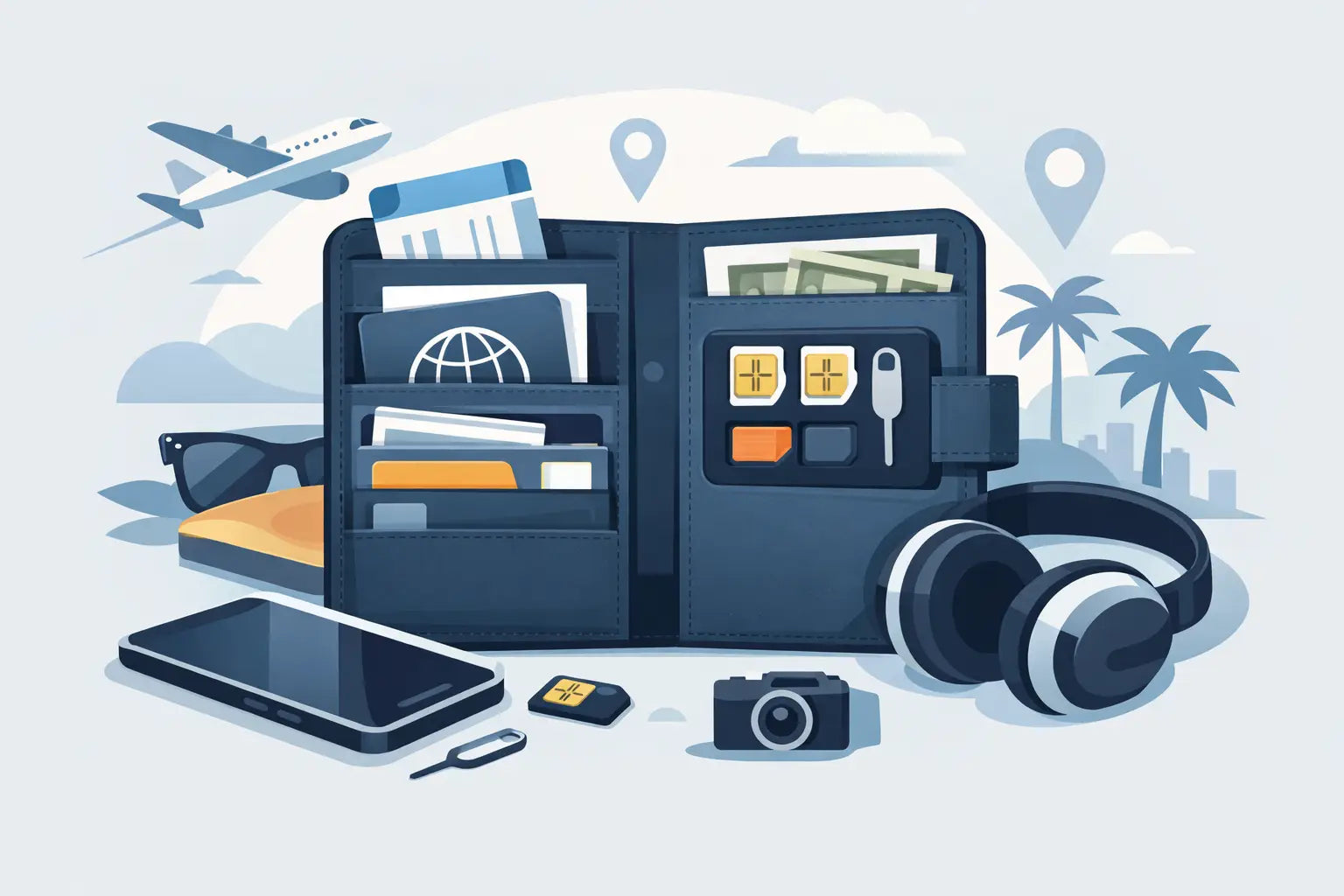
For most travelers, the sweet spot is a wallet that carries one or two passports, several cards, folded cash, and a few trip-specific essentials like a SIM card and ejector pin. Add a mini pen, and you have a setup that covers the friction points most people actually face. Beyond that, there is a law of diminishing returns. More storage often means more material, and more material means more bulk.
A slim wallet also tends to get used more often outside the airport. That matters. If a travel wallet only comes out a few times a year, it is easier to forget, harder to justify, and less likely to become part of your routine. If it works as everyday carry with extra travel capability, it delivers more value.
Why the pen holder is more useful than it sounds
The obvious use is filling out forms. But that is only part of it.
A built-in pen holder helps because it keeps one small, often-borrowed tool anchored to the wallet you already need to carry. That saves time in transit and removes one more loose item from your bag. It also helps in quieter ways: signing receipts abroad, noting gate changes, writing a luggage tag, or jotting down a backup phone number when your battery is low.
There is also a psychological advantage to better organization. Travel feels smoother when your essentials live in one place. Instead of patting every pocket and unzipping different compartments, you reach once. Small efficiencies add up, especially on multi-leg trips or tight connections.
That said, not every traveler needs this feature equally. If you never carry paper documents, rarely fill out forms, and prefer a digital-first setup for everything, a pen holder may feel secondary. But for many international travelers, the appeal is less about constant pen use and more about preparedness. The pen is there when the situation becomes inconvenient.
The design details that separate premium from bulky
The difference between refined and clumsy usually comes down to construction.
Material matters first. Premium leather, especially a soft but structured leather like Cow Nappa, helps a wallet stay elegant while handling repeated travel use. It should feel smooth in hand, flex without collapsing, and hold its shape as you add cards, cash, and documents. Cheap materials often become rigid, puffy, or worn-looking faster than expected.
Layout matters just as much. Passport access should be intuitive. Card slots should grip securely without becoming a struggle at checkout. Cash should fit without forcing awkward folds. If there is space for a SIM card and ejector pin, those details should be integrated, not tacked on as gimmicks.
And then there is the pen itself. The best wallet designs account for a compact pen from the start. They do not treat it as an afterthought. A full-size pen can distort the profile, while a mini pen supports the slim format the wallet is trying to preserve.
Who gets the most value from this type of wallet
If you travel for business, the appeal is obvious. You want clean access to documents, cards, and a pen without digging through a briefcase or backpack during check-in. A wallet that looks polished and performs quickly suits that environment.
If you travel for leisure but like to stay organized, the value is just as real. Family trips, long-haul itineraries, and international arrivals create plenty of moments where a little order saves stress. Even solo travelers who pack light often appreciate carrying one compact piece instead of juggling passport, card wallet, folded bills, and a loose pen.
It also fits hybrid lifestyles. Many people now move between everyday city use and short travel windows. In that context, a well-designed passport wallet does not need to sit in a drawer waiting for vacation. It can work daily, then step up when your boarding pass and passport enter the mix.
What to avoid when shopping
The biggest mistake is choosing a wallet that promises everything. If it holds too much, it usually carries too poorly.
Watch out for oversized zip-around styles that become mini folios. They may fit extra documents, but they often feel cumbersome at security and too large for comfortable everyday use. Also be cautious with external pen loops that snag, stretch, or make the silhouette look overbuilt.
Another issue is poor internal prioritization. Some wallets offer many compartments but make the main items harder to reach. If accessing your passport requires moving cards or unfolding sections, the design is working too hard.
Finally, do not ignore proportions. A passport wallet with pen holder should still feel intentionally slim. The point is not just to carry a pen. The point is to organize travel essentials in a way that remains elegant and pocket-friendly.
A better standard for travel carry
The strongest travel accessories solve problems before you notice them. They make movement easier, reduce clutter, and stay out of the way while looking sharp. That is why the best passport wallets are not the biggest ones. They are the ones that carry exactly what matters, with no wasted volume and no awkward extras.
A passport wallet with pen holder works when it feels less like a specialty item and more like a smarter wallet. It should give you fast access at the airport, confidence on the move, and enough refinement to keep using long after landing. That balance of slim design and practical capacity is where premium travel carry stands apart.
For travelers who want one place for the essentials and no pocket bulk as the trade-off, that small pen holder is not a gimmick. It is proof that the design was paying attention.


Leave a comment
This site is protected by hCaptcha and the hCaptcha Privacy Policy and Terms of Service apply.