
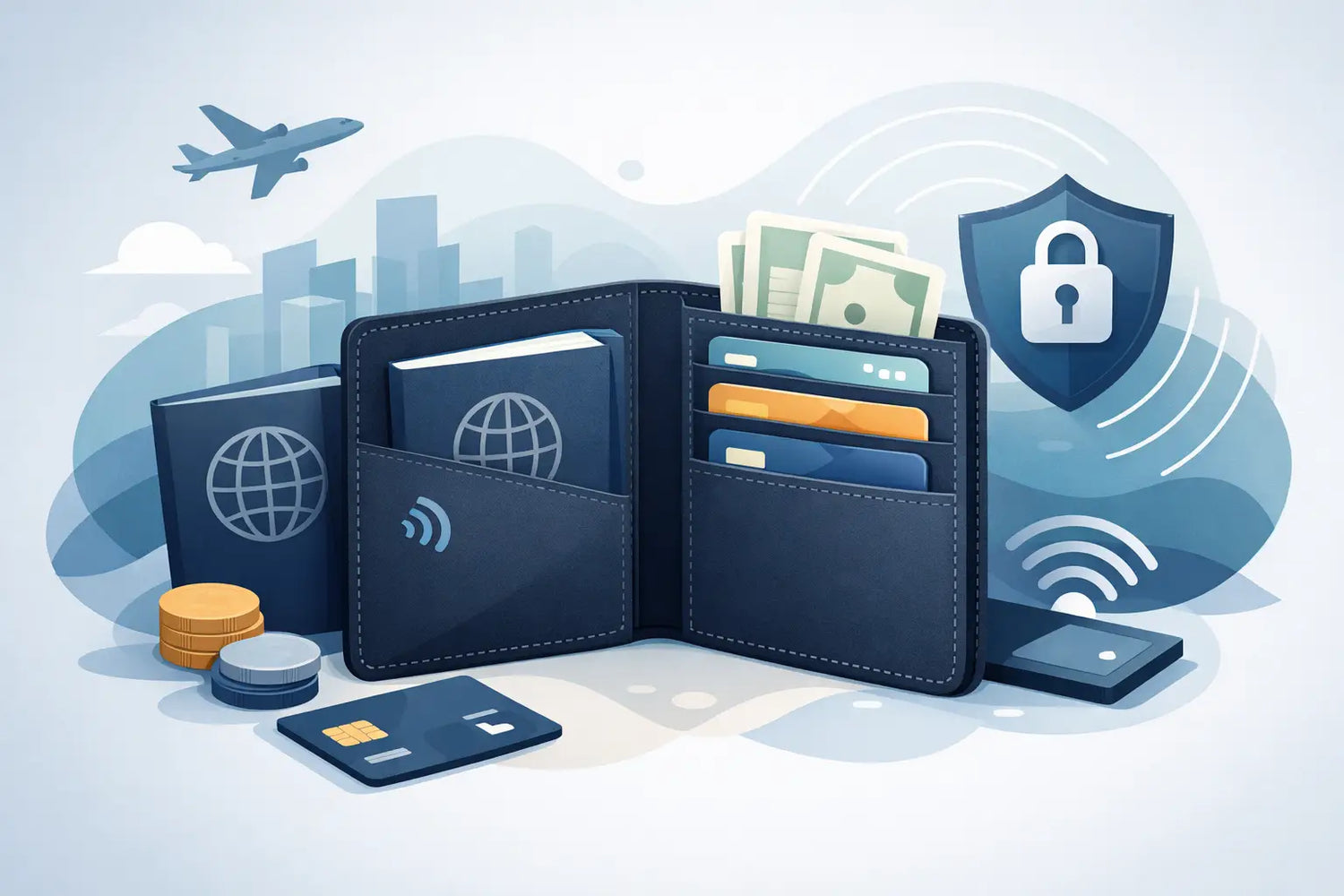
Airport security has a way of exposing bad design. The bulky passport holder that barely fits in your jacket. The folded boarding pass jammed behind loyalty cards. The SIM tool you packed carefully and still can't find when you land. A good rfid passport wallet fixes that friction before your trip even starts.
The catch is that RFID protection alone does not make a travel wallet good. It is one feature, not the whole product. If the wallet is too thick, awkward to access, or overloaded with compartments you never use, it solves one problem while creating three more. For most travelers, the best choice is the one that protects your essentials while staying slim enough to carry every day.
What an RFID passport wallet is really for
At its simplest, an RFID passport wallet is designed to hold your passport and shield certain cards from unauthorized radio-frequency scans. That sounds straightforward, but the real reason people buy one is organization. They want one place for the items that matter in transit - passport, payment cards, cash, boarding pass, and a few small travel extras.
That is where quality starts to separate itself. Some wallets treat passport storage as the headline and everything else as an afterthought. Others try to become a full travel folio and end up too large for a pocket. The smarter middle ground is compact, purposeful storage. Enough room for what you actually carry, without turning your wallet into another bag.
RFID passport wallet features that matter most
The first thing to look at is not the RFID lining. It is the footprint. A passport wallet should feel compact in the hand and easy in the pocket. If it only works in a tote, backpack, or seat pocket, it is less useful in real travel moments when you need to move quickly through check-in, security, boarding, and arrival.
Capacity matters too, but only when it is used efficiently. A well-designed slim wallet can carry more than it appears to. Passports, several cards, folded cash, a boarding pass, and even small travel tools can fit cleanly if each slot is intentional. Good design is not about adding more sections. It is about making every section earn its place.
Material is another dividing line. Cheap synthetic finishes can look fine online and age poorly in your hand. Premium leather, especially soft full-grain or Cow Nappa leather, tends to feel better immediately and wear better over time. It also makes a difference in how slim the wallet can remain when full. Better materials allow for structure without stiffness and elegance without bulk.
Then there is access. This gets overlooked until you are standing at immigration with a line behind you. A passport should slide out smoothly. Cards should be easy to reach without forcing the whole wallet open. If you carry a spare SIM card or ejector pin, those should be secure but not buried. Fast access is part of the product, not a bonus.
Why slim beats oversized almost every time
Travel wallets have a habit of promising convenience while becoming one more thing to manage. Large zip folios, thick document organizers, and oversized holders may offer lots of room, but many travelers simply do not need that much storage. They need fewer moving parts and less pocket bulk.
A slim rfid passport wallet works better because it fits how people actually travel now. Mobile boarding passes reduce paper, digital itineraries replace printouts, and fewer people carry multiple currencies at once. What remains are the essentials. A wallet built around those essentials feels more useful than one built for every possible scenario.
There is also a style factor, and it matters. A refined wallet should move easily from airport to hotel to dinner without looking like a travel accessory you only use in transit. The best designs do not announce themselves. They simply keep everything in order while looking sharp enough for daily carry.
The trade-off with RFID protection
RFID protection sounds like a clear yes, but there is a practical nuance. Not every traveler faces the same level of risk, and not every item in your wallet benefits equally from shielding. RFID is most relevant for certain contactless cards and chip-enabled documents. It is less useful if the wallet is poorly designed overall.
That is why the best approach is balance. Choose RFID protection as part of a wallet that already excels in size, storage, and usability. Do not choose a thick or clumsy wallet just because the packaging emphasizes blocking technology. Security matters, but so does how often you will actually want to carry the wallet.
Some RFID-lined wallets also become stiffer or heavier depending on how they are constructed. That does not make them bad, but it is worth checking whether the added protection changes the profile too much. If slimness is the point, the protection should feel integrated, not bolted on.
How to judge storage without getting fooled by specs
Storage claims can be misleading because they focus on maximum capacity, not comfortable capacity. A wallet may technically fit two passports, eight cards, cash, receipts, and more. That does not mean it will stay elegant once loaded.
A better question is how the wallet performs with your real setup. For many travelers, that means one passport, a few payment cards, an ID, some cash, and a boarding pass. If you travel internationally, add a SIM card and ejector pin. If it can hold those items neatly and still stay pocket-friendly, that is a better result than a wallet with impressive numbers and awkward bulk.
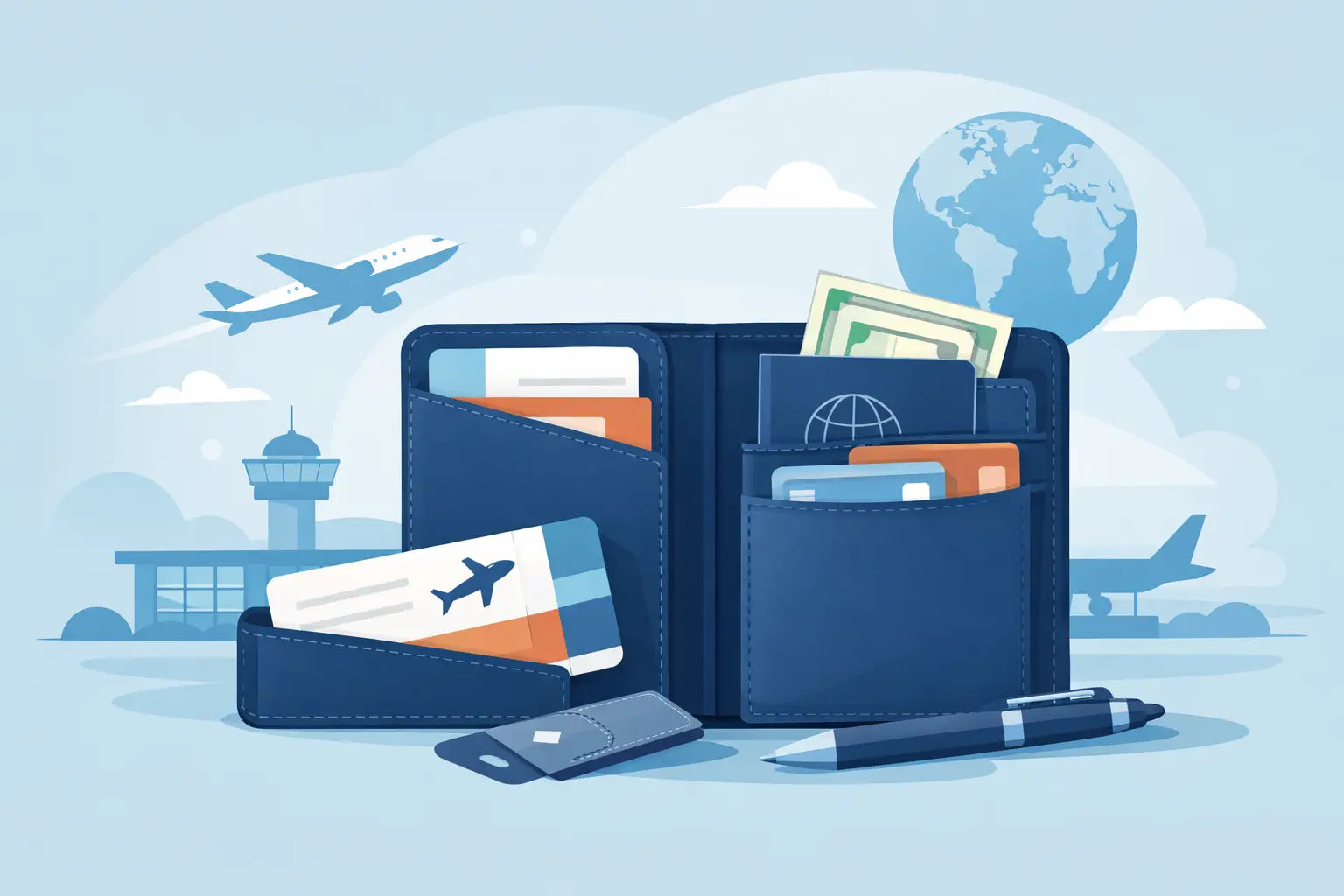
Thoughtful details often reveal more than big claims. A dedicated SIM slot is useful if you switch networks when traveling. A space for a mini pen can save time on customs forms. A boarding pass sleeve that keeps paper flat is more practical than one more generic card slot. Good storage feels edited.
When an RFID passport wallet earns a place in daily carry
The strongest travel accessories are not limited to travel. A passport wallet that only leaves the drawer before an international trip is less compelling than one you can use every week. That is where slim format becomes a real advantage.
If the wallet can carry your everyday cards and cash without feeling oversized, it becomes part of your normal routine. Then when a trip comes up, you already know where everything goes. No repacking, no switching systems, no hunting for travel documents at the last minute.
This is especially valuable for business travelers and frequent flyers, but it also matters for occasional travelers who want less friction. Familiarity reduces mistakes. The fewer separate pouches and holders you rely on, the easier it is to move with confidence.
What premium design looks like in practice
Premium is not just a leather label or a higher price. In a passport wallet, premium design shows up in restraint. Clean lines. Minimal excess stitching. Compartments placed where your fingers expect them. A profile that stays slim even when in use.
It also shows up in touch. Soft leather that does not feel plasticky. Edges that feel finished. Enough structure to protect what you carry, without turning the wallet rigid. These details are subtle, but they are exactly what separate a product that photographs well from one that performs well.
For a modern traveler, premium also means efficiency. You should be able to store a surprising amount in a small footprint. Big on space, slim in your pocket - that idea only works when design is disciplined. Otherwise, it is just marketing.
The right RFID passport wallet depends on how you travel
If you travel light and value everyday carry, prioritize slimness and quick access. If you often change SIM cards, look for dedicated storage that keeps small items secure. If you carry multiple family passports, a single slim wallet may not be enough, and a larger organizer could make more sense for that specific use.
That is the real answer for most travel gear - it depends. The best wallet is not the one with the longest feature list. It is the one that fits your routine with the least resistance. For many travelers, that means a compact leather design with integrated RFID protection, smart card storage, room for cash and boarding passes, and a layout that stays clean under pressure.
A well-made rfid passport wallet should feel like one less thing to think about. When your documents are easy to reach, your essentials stay organized, and your pocket does not feel overloaded, travel gets simpler in the ways that count.

Leave a comment
This site is protected by hCaptcha and the hCaptcha Privacy Policy and Terms of Service apply.