
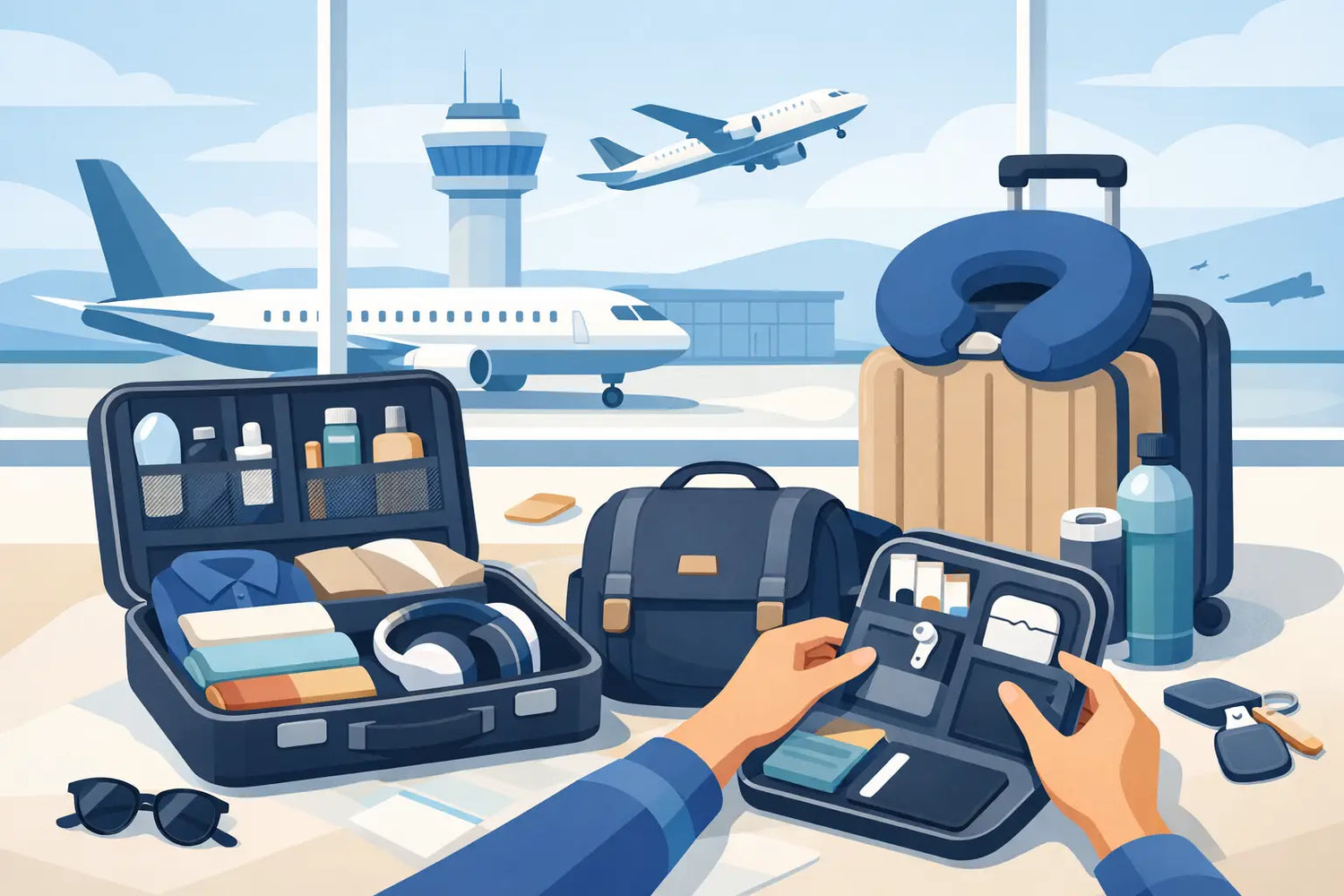
The slowest part of airport travel usually is not security. It is that awkward moment when you are holding up the line, half-zipped bag open, looking for your passport, boarding pass, and the card you swore was in the front pocket. If you want to know how to organize airport essentials, the goal is simple: keep every critical item in one place, in the right order, and easy to reach with one hand.
That sounds obvious, but most travel setups fail for one reason. They are built around storage, not access. A bag with ten compartments can still be frustrating if your passport is buried under chargers, receipts, and lip balm. Smart airport organization is less about carrying more and more about carrying the right things in a layout that matches how you move through the terminal.
How to organize airport essentials without overpacking
Start by separating airport essentials from general travel items. These are not the same category. Airport essentials are the things you may need before boarding or immediately after landing: passport, ID when relevant, boarding pass, payment card, a bit of cash, phone, charging cable, earbuds, and any small travel-specific extras like a SIM card or ejector pin.
Everything else can go deeper in your carry-on. That includes snacks, a sweatshirt, toiletries, and anything you will not need while standing at check-in, security, immigration, or the gate. The cleaner this split is, the less often you will need to dig through your bag in public.
A good rule is to create two zones. Zone one is your fast-access setup, ideally something slim enough to carry in hand, a jacket pocket, or the top of your personal item. Zone two is your secondary storage inside the bag. Once you stop treating your whole carry-on like one giant catch-all, the airport starts to feel much easier.
Build your airport setup around sequence
The best way to organize airport essentials is to follow the order you will use them. At the airport, your core items tend to appear in a predictable pattern. You will usually show your passport and boarding pass first. Then you may need a payment card or phone. After that, you may not need much until boarding, and on arrival you might want quick access to a SIM card, some local cash, or a pen for forms depending on where you are flying.
This is why bulky wallets and deep pouches create friction. They hold everything, but they do not present anything in the right sequence. A slimmer layout works better because each item has a dedicated place and stays visible.
Think of it like this: your travel setup should reduce motion. Fewer zippers. Less shuffling. No stacking five things on top of each other just to get to one passport. When your essentials are organized by order of use, every checkpoint becomes faster and less annoying.
What belongs in your fast-access carry
For most travelers, the fast-access carry should be limited to the essentials you are likely to reach for multiple times. That usually means your passport, boarding pass if you are using paper, one or two payment cards, some folded cash, and your phone. If you travel internationally often, adding a spare SIM card, SIM ejector pin, and mini pen makes sense too.
The trade-off is that minimalism only works if it is intentional. If you strip down too far, you end up moving items back into random bag pockets. If you carry too much, your setup becomes bulky and defeats the point. The sweet spot is compact capacity - enough space for what matters, without turning your travel wallet into a second bag.
What should stay in the bag
Keep lower-priority items in your carry-on or personal item, but group them by function. Tech in one pouch. Comfort items in another. Liquids where security can access them easily. This keeps your airport essentials protected from clutter and makes repacking faster after security.
It also helps to avoid duplicates. You do not need three cards, two currencies, and every receipt from the last six months in your airport setup. The lighter your essential carry, the quicker you move.
Choose a slim organizer, not a bulky travel wallet
A lot of travel wallets promise organization, but they solve one problem by creating another. They fit everything, then become too thick for a pocket and too awkward to handle one-handed. That is fine if you want a document pouch for a family trip. It is less useful if you travel often and want a cleaner, faster setup.
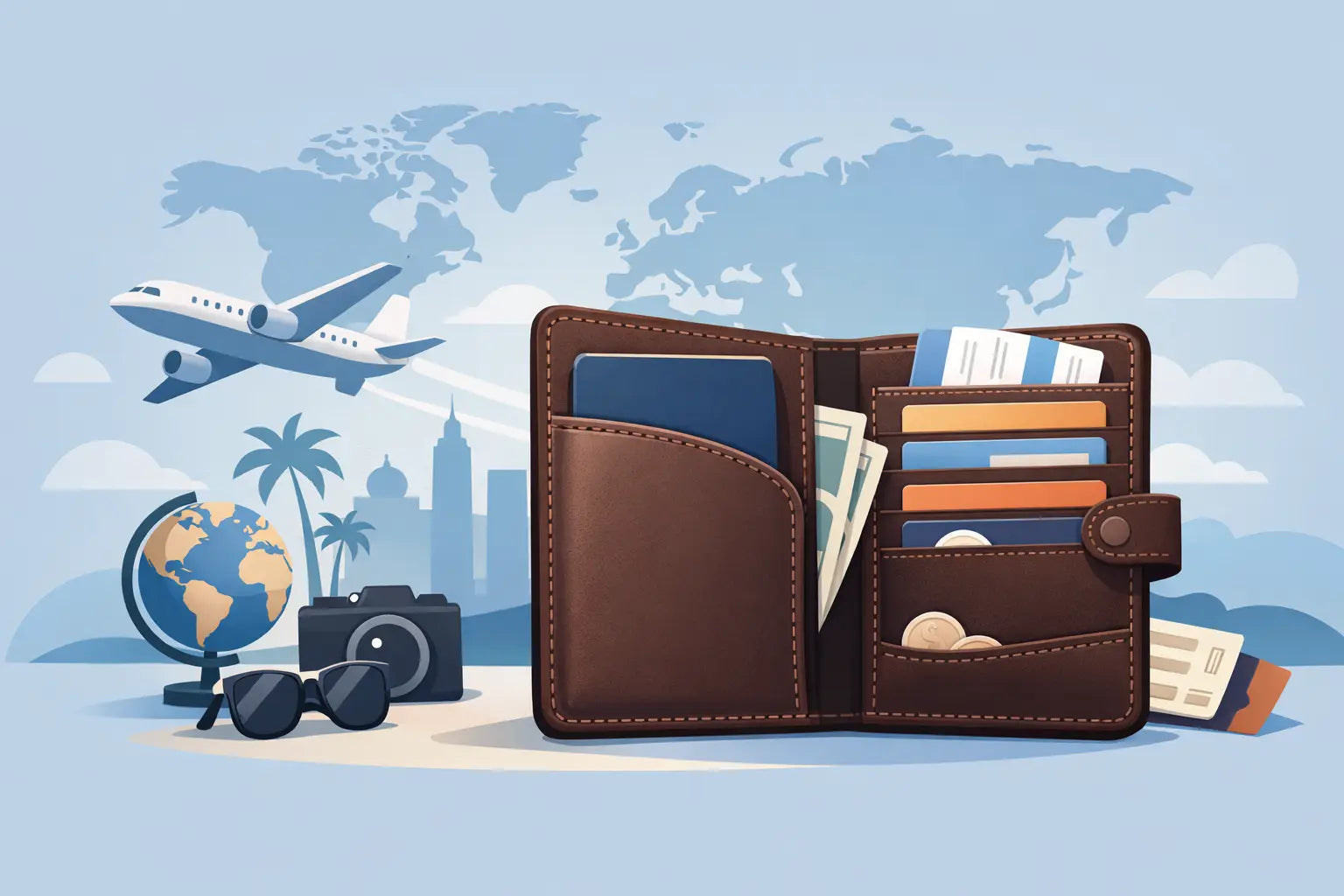
A slim passport wallet is usually the better answer because it forces discipline while still keeping the key items together. The best designs can hold a passport, cards, cash, boarding pass, SIM tools, and even a small pen without becoming oversized. That is the difference between carrying essentials and carrying bulk.
Material matters too. Premium leather ages well, feels refined in hand, and works beyond the airport. A well-designed slim wallet should not feel like a single-purpose travel accessory. It should work just as well on an everyday basis, which means you are more likely to stay organized between trips rather than rebuilding your setup every time you fly.
Keep your documents visible and protected
Airport organization is not only about speed. It is also about reducing the chance of losing something important. Loose boarding passes, folded passports in coat pockets, and extra cards tossed into side compartments are easy to misplace when you are tired or rushing between gates.
Keeping travel documents consolidated in one dedicated organizer gives you a single checkpoint. If that one item is with you, the critical pieces are with you. That creates a calmer kind of travel because you are not mentally tracking seven separate objects.
This matters even more on international trips. You may be moving through several touchpoints in a short period of time, especially on long-haul routes or complex connections. A compact setup lets you confirm everything at a glance.
Prepare before you leave for the airport
Most airport stress starts at home. The best time to organize airport essentials is not in the rideshare on the way to the terminal. It is the night before, when you can edit what you are carrying and place each item with intention.
Check your passport validity. Remove cards you do not need. Add the payment method you actually plan to use. Put in a small amount of cash if your destination calls for it. If you are landing internationally, pack your SIM card and ejector pin before you leave, not after you land and realize they are in another bag.
This is also when a slim organizer proves its value. Because space is defined, overpacking becomes obvious. If it does not fit cleanly, it probably does not belong in your airport-essential setup.
Make security and boarding easier on yourself
Security rewards simplicity. The fewer loose items you carry, the fewer things you have to scoop up from bins while everyone behind you is waiting. If your passport wallet, phone, and watch are your main personal items, you can move through much faster than someone managing handfuls of paper, receipts, and cards.
Boarding works the same way. When your boarding pass and passport live in the same place every time, there is no searching. You reach, present, and keep moving. Small efficiencies like this are what make travel feel polished instead of chaotic.
For business travelers and frequent flyers, these moments add up. A setup that saves 20 seconds at five different touchpoints is not just convenient. It changes the whole feel of the trip.
The best organization system is the one you will keep using
There is no perfect universal packing formula because travel styles vary. A solo weekend flyer does not need the same setup as a parent managing multiple passports. A domestic trip may call for less than an international one. But the principle stays the same: keep your airport essentials consolidated, slim, and easy to access in the order you need them.
That is why thoughtful design matters. Products like WhimHold work well because they focus on one clear promise - big on space, slim in your pocket. When your passport, cards, cash, boarding pass, SIM tools, and pen all fit in one refined everyday carry, organization stops feeling like effort.
The smartest airport setup is the one that disappears into your routine. You should not have to think about where your essentials are. They should already be exactly where your hand expects them to be, every time you travel.

Leave a comment
This site is protected by hCaptcha and the hCaptcha Privacy Policy and Terms of Service apply.