
You notice wallet bulk most when you travel. At security, at boarding, at check-in, and every time you reach for the card you swear was in the front slot. A good guide to RFID blocking wallets should clear up one simple question: does this feature actually help, or is it just one more thing making a wallet thicker than it needs to be?
The short answer is that RFID blocking can be useful, but only when it is paired with smart design. For frequent travelers and anyone who carries contactless cards, the best wallet is not the one with the most layers, the loudest claims, or the heaviest hardware. It is the one that keeps essentials protected, organized, and easy to access without turning your pocket into a brick.
What RFID blocking wallets actually do
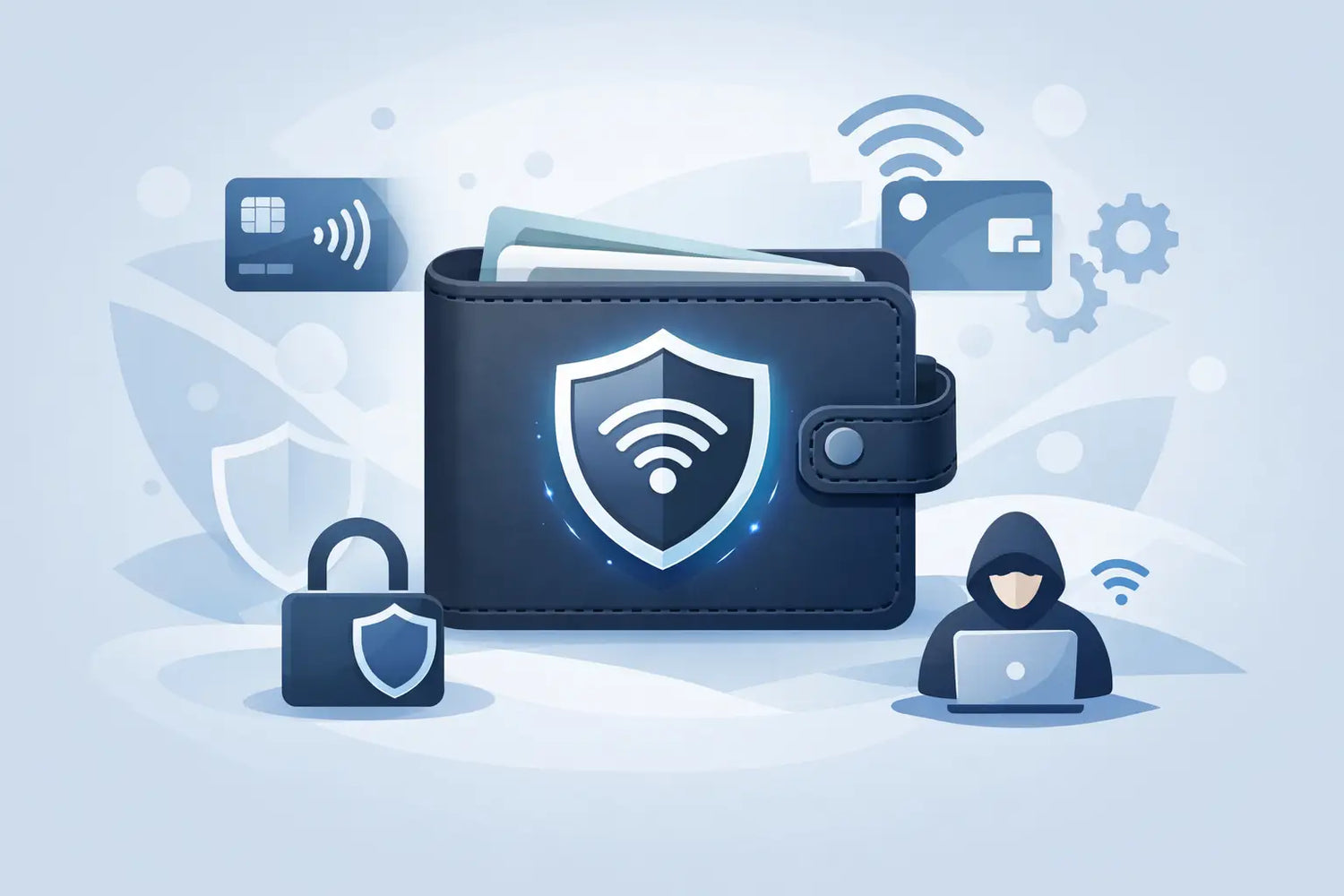
RFID stands for radio-frequency identification. In wallet terms, it usually refers to cards that can communicate wirelessly at very short range, such as some contactless credit cards, transit cards, or access cards. An RFID blocking wallet uses shielding material to disrupt that wireless signal.
That sounds highly technical, but the practical point is simple. The wallet is designed to make it harder for nearby scanners to read certain cards while they are inside. It is a layer of protection against unwanted scans, not a guarantee against every form of theft or digital fraud.
This is where shoppers often get misled. RFID blocking does not protect magnetic stripes from skimming at a compromised terminal. It does not stop phishing, data breaches, or card-not-present fraud online. It addresses one specific risk, and for most people that is only part of the wallet decision.
Who really benefits from a guide to RFID blocking wallets
If you commute lightly and only carry one or two cards, RFID blocking may be a nice extra rather than a must-have. If you travel often, move through crowded airports, use public transit, or carry multiple payment and ID cards, it becomes more relevant.
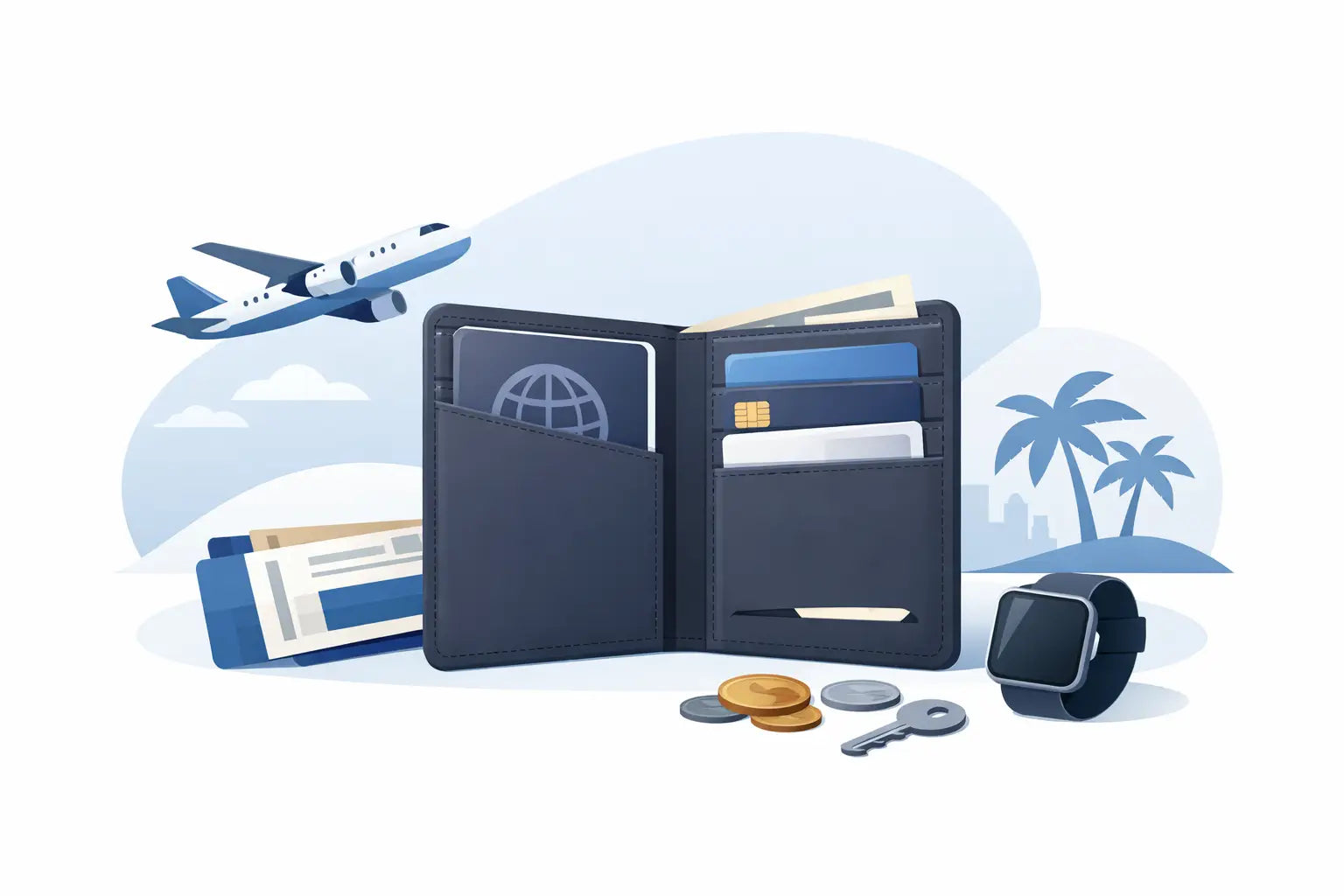
Travel changes the equation because your wallet is doing more than holding a debit card and a few bills. It may also be carrying a passport, backup cards, boarding passes, a local SIM, and emergency cash. That concentration of essentials makes thoughtful protection more appealing, especially if you prefer to keep everything in one place instead of splitting items across bags and pockets.
That said, RFID blocking should not push you toward a bulky wallet. Protection that adds friction to every interaction is not a great trade. If a wallet is hard to access, overbuilt, or awkward in a front pocket, you feel that cost every day.
The biggest mistake people make when choosing one
They shop for the feature, not the format.
A wallet can advertise RFID blocking and still be poorly designed. It can be too thick before you put anything in it. It can hide cards so deeply that every payment takes longer. It can hold a passport in theory but become overstuffed in practice. And it can look sleek online while feeling clumsy the moment you carry it through an airport.
For modern travel, the better approach is to start with how you move. Do you want one slim wallet that works at the gate, in a taxi, and at dinner? Do you want room for a passport and boarding pass without carrying a separate document pouch? Do you care about premium materials and a clean silhouette, or are you willing to trade elegance for extra compartments you may never use?
Once the format is right, RFID blocking becomes a smart addition. Before that, it is just a checkbox.
How to choose a slim RFID blocking wallet
The best slim RFID blocking wallet balances three things: protection, access, and capacity. Miss one of those, and the wallet starts to work against you.
Protection matters, but it should stay in the background. You should not need to think about it each time you tap, pay, or pass through security. If the shielding adds excessive structure or stiffness, the wallet may end up feeling more like a case than an everyday carry essential.
Access matters even more for travelers. You want cards, cash, and documents arranged in a way that makes sense under pressure. That means no digging for a passport at the counter and no unfolding half the wallet just to reach one card. Good organization feels calm. Bad organization makes every interaction slower.
Capacity is where many slim wallets either shine or fail. Minimalism is not the same as limitation. A well-designed wallet can stay compact while still carrying more than expected. That is especially valuable when you need your passport, payment cards, cash, SIM card, and travel tools in one place without adding jacket-pocket bulk.
Material choice also matters. Premium leather tends to age better, feel better in hand, and maintain a refined look over time. Cheap synthetic materials can save money upfront but often add stiffness or visual clutter. For a travel wallet you plan to carry often, the tactile experience is part of the value.
RFID blocking wallets for travel vs everyday use
This is where it depends.
An everyday city wallet and a travel wallet are not always the same product. For daily use, you may want a very compact card-and-cash setup with little else. For travel, you need a broader range of essentials close at hand. The challenge is finding something that handles both roles without looking oversized on normal days.
That is why slimmer passport wallets have become more appealing than traditional travel organizers. Old-style travel wallets often solved the storage problem by becoming mini folders. They fit a lot, but they rarely fit well in a pocket. They work in the airport lounge, then become inconvenient the rest of the trip.
A slimmer format is more versatile. It lets you carry what matters without forcing you into a bag-dependent setup. And if the wallet includes RFID blocking, that extra layer comes with you whether you are catching a flight or just heading out for coffee.
What to ignore in marketing claims
Be cautious with anything that treats RFID blocking as a complete security solution. It is not. Also be skeptical of wallets that claim huge capacity but show very little about how that capacity is organized.
The details matter more than buzzwords. How many cards can it hold comfortably? Does it support a passport without awkward folding or strain? Is there a dedicated place for cash, SIM cards, or a pin? Can you retrieve a boarding pass quickly? Those are the questions that shape real usability.
There is also a style factor that should not be dismissed. If a wallet feels too tactical, too bulky, or too engineered, many people stop carrying it consistently. The best travel accessories tend to disappear into your routine. They look polished, feel intuitive, and remove small moments of friction instead of creating them.
A better standard for RFID wallet design
A better guide to RFID blocking wallets starts with this idea: protection should support movement, not interrupt it.
For a style-conscious traveler, that means a wallet should do more than shield cards. It should streamline the entire carry. Passport, cards, cash, transit essentials, and travel extras should sit in one compact footprint that still feels elegant. The slimmer the profile, the more likely it is to be used every day, not just packed for trips.
This is where design-led travel wallets stand apart. When the layout is disciplined and the storage is efficient, RFID blocking becomes part of a larger benefit story rather than the headline. You are not buying a shield. You are buying less bulk, faster access, and better control over the items you reach for most.
A product like WhimHold fits that shift well because it treats slimness as a performance feature, not just an aesthetic one. That is the right lens. A wallet should carry a surprising amount while still feeling light, clean, and pocket-friendly.
So, is an RFID blocking wallet worth it?
For many travelers, yes - if the wallet is slim, well organized, and built for real use. If RFID blocking comes wrapped in unnecessary bulk, the trade-off is harder to justify.
The smartest choice is not the wallet with the most features on paper. It is the one you can carry comfortably through every part of the trip and still want to use when the trip is over. Pick the design first, the layout second, and the protection as a built-in advantage. Your wallet should make travel feel lighter, not more complicated.
The right one earns its place not by promising everything, but by keeping your essentials exactly where you need them, in a form you never have to fight.

Leave a comment
This site is protected by hCaptcha and the hCaptcha Privacy Policy and Terms of Service apply.