
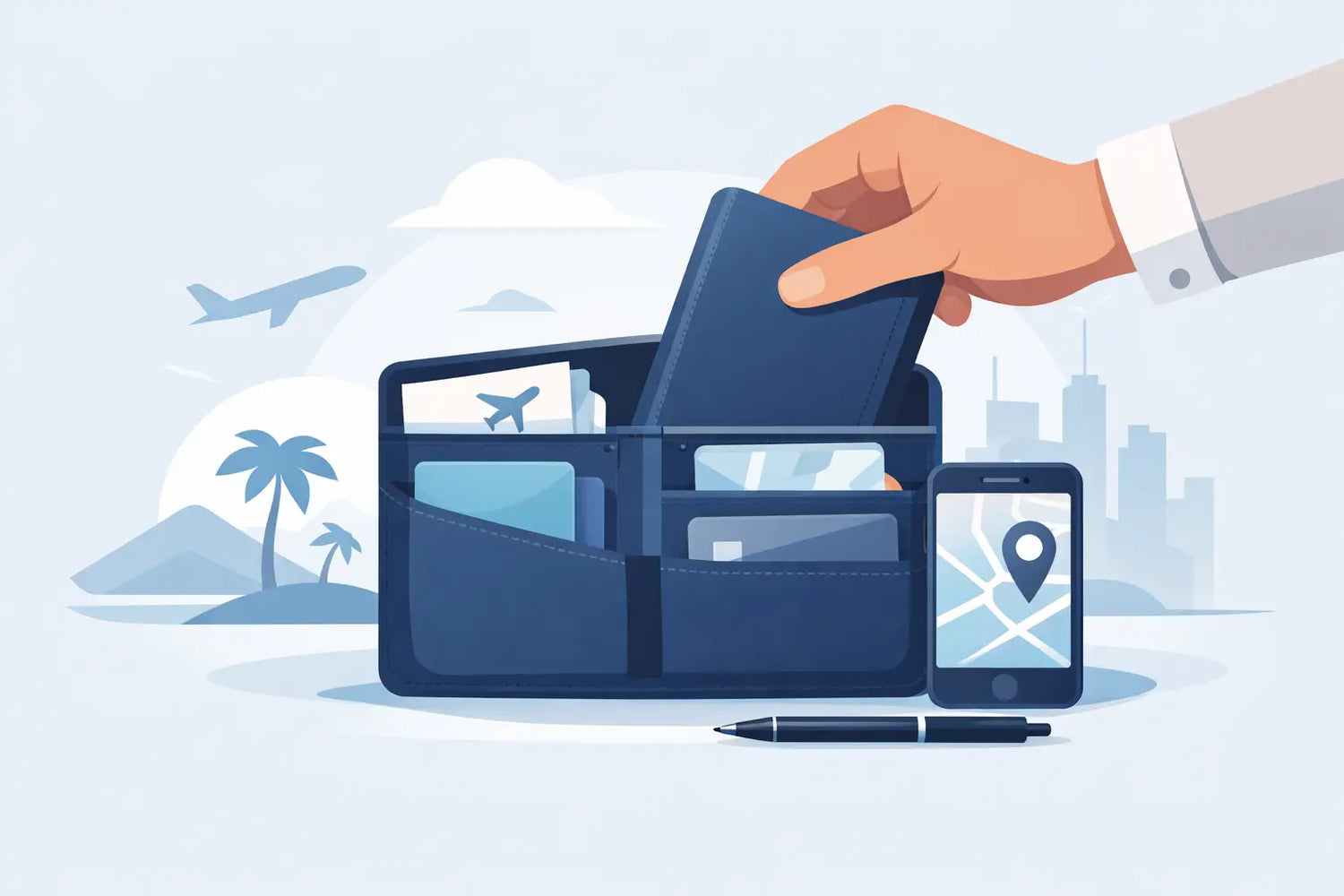
You feel bad document carry at the worst possible moment - at security, at boarding, or while digging through a tote for a passport that should have been easy to reach. If you are figuring out how to carry travel documents, the goal is not just security. It is speed, order, and less friction from curb to gate.
Most people start with the wrong question. They ask whether they need a passport holder, a money belt, a pouch, or a folder. The better question is simpler: what do you actually need to access quickly, and what can stay packed until you arrive?
That distinction changes everything. It is the difference between a sleek setup that works in motion and a bulky catch-all that slows you down.
How to carry travel documents for real-world travel
The cleanest setup keeps your essential documents on your person and your backup items in your bag. That means your passport, primary payment card, some cash, boarding pass if you use paper, and any arrival details you may need should stay in one slim, dedicated place. Anything non-essential for the airport phase, like extra cards, printed itineraries you will not need immediately, or duplicate paperwork, can stay packed.
This matters because airports reward fast access. You are moving through check-in, security, boarding, customs, ground transport, and hotel arrival. Every handoff is easier when your travel essentials live in one organized wallet instead of three different pockets and a backpack compartment.
There is a trade-off, of course. Carrying everything in one place is efficient, but overloading that one place creates bulk. That is why slim organization matters more than storage alone. Capacity is useful only if it stays pocket-friendly.
The best way to organize travel documents
Think in layers: active, backup, and archived.
Your active layer is what you need while in transit. For most travelers, that includes a passport, ID when relevant, one or two payment cards, some local or backup cash, and a boarding pass or luggage receipt if you are using paper. If you swap SIM cards when you land, your SIM and ejector tool belong here too. These are the items that should fit in a single, easy-access travel wallet.
Your backup layer includes extras that matter, but not at every checkpoint. A second card, emergency cash, photocopies, and supporting reservations can stay in your carry-on. Keep them separate from your active layer so you are not flashing everything every time you need one item.
Your archived layer is anything you are carrying just in case. Printed confirmations, insurance details, and secondary paperwork can stay deeper in your bag. You want them available, not in the way.
This is where many travel wallets fail. They promise organization, then become mini briefcases. A smarter design keeps the active layer tight and accessible without wasting space on padding, oversized covers, or awkward compartments.
What should stay on your person
If you want the shortest answer to how to carry travel documents, it is this: keep your essentials in a slim travel wallet that fits a jacket, coat, or front pocket without creating a brick-shaped outline.
That usually means carrying:
- Passport
- Primary card
- Backup card
- A small amount of cash
- Boarding pass if printed
- SIM card and ejector pin if needed
What should stay in your bag
Your bag should hold backups, not your whole travel identity in loose form. If your passport is in your backpack one minute, then in your hand, then in a seat pocket, you increase the chance of leaving it somewhere.
Use your bag for overflow and contingency items. Think spare currency, copies, medication documents, and printed bookings you are unlikely to need while walking through the airport. Keep them in one sleeve or pouch so they do not drift around.
Security matters, but access matters too
A lot of travel advice leans hard on theft prevention and forgets usability. Yes, security matters. But if your setup is so hidden or complicated that you fumble every time you need your passport, it is not working.
Money belts have their place, especially in high-risk situations, but they are not always practical for airport flow. If you are constantly lifting layers of clothing to reach your documents, you are trading one inconvenience for another. Crossbody bags can work well, but only if they are compact and organized. Large totes and backpacks are secure only until you need something quickly.
For most modern travelers, the sweet spot is a slim document wallet carried close to the body, paired with a bag that holds backup items. That gives you control without bulk.
It also looks cleaner. And that matters more than people admit. If your everyday carry feels refined and intentional, you are more likely to stick with it trip after trip.
Common mistakes when carrying travel documents
The biggest mistake is overpacking your wallet. Your travel wallet is not your desk drawer. If you load it with old receipts, five loyalty cards, multiple currencies, and every card you own, it stops being efficient.
The second mistake is splitting essentials across too many places. Passport in one pocket, boarding pass in another, card in your regular wallet, cash in a side pouch - this creates friction at every step.
The third mistake is choosing bulk over design. Traditional passport holders often look polished until you actually fill them. Then they become too thick for a pocket and end up in a bag, which defeats the point of fast access.
A final mistake is forgetting the arrival phase. Getting through the airport is only half the equation. You also want your setup to work in a taxi line, at hotel check-in, or while buying a coffee after landing. A good travel wallet should still make sense once the flight is over.
Choosing the right wallet for travel documents
The best travel wallet is not the biggest one. It is the one that carries your essentials with discipline.
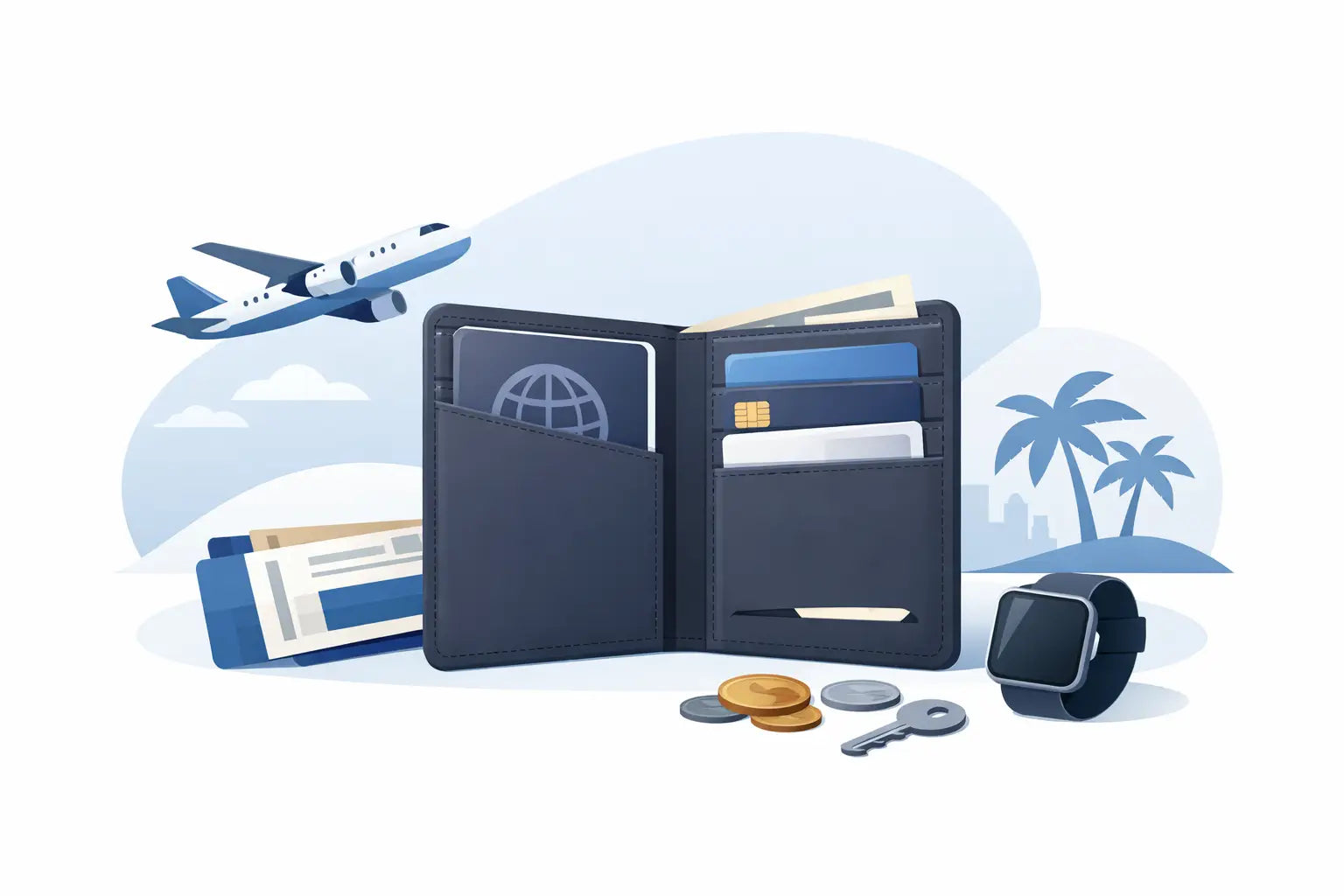
Look for a design that holds a passport flat, keeps cards secure, and leaves room for cash or a boarding pass without becoming oversized. Premium leather helps, but only if the construction stays slim. Thick materials and heavy padding can make a wallet feel luxurious in the hand and cumbersome in the pocket.
This is where a well-designed ultra-slim passport wallet earns its place. You get structure without stiffness, storage without sprawl, and a format that feels equally natural in the airport and in daily use. That last part matters. If a product only works on travel days, it often gets forgotten when you need it most.
WhimHold approaches this the right way: maximum utility in a genuinely compact form. That means fewer moving parts, less pocket bulk, and easier access to the items that matter most.
Slim vs. spacious is the wrong debate
A lot of shoppers think they need to choose between a slim wallet and a functional one. You do not. The better standard is high-efficiency storage.
A well-planned interior can hold passports, cards, cash, a SIM tool, and even a pen without feeling overbuilt. That is very different from a bulky travel organizer that tries to carry half your bag inside a leather shell.
The result is simple: you move faster, your pockets stay clean, and your documents are exactly where you expect them to be.
A smarter routine before you leave home
The easiest way to carry travel documents well is to set them up before travel day. Do not wait until you are in the rideshare to decide what goes where.
The night before, load your passport, your two most important cards, a modest amount of cash, and anything specific to the trip, like a SIM card or printed boarding pass. Remove the non-essentials. Then place your backup items in one part of your carry-on.
This routine takes five minutes and saves you repeated friction all day. More importantly, it creates a repeatable system. Good travel gear should reduce decisions, not add them.
If you travel often, that consistency becomes part of the appeal. The same wallet that works for a weekend city break can also handle a business trip or a long-haul international itinerary, as long as it stays focused on the essentials.
The smartest answer to how to carry travel documents is not more compartments, more bulk, or more gear. It is carrying less, organizing better, and choosing a wallet that keeps up without getting in the way. When your setup is slim, secure, and easy to reach, travel feels sharper from the start.

Leave a comment
This site is protected by hCaptcha and the hCaptcha Privacy Policy and Terms of Service apply.