
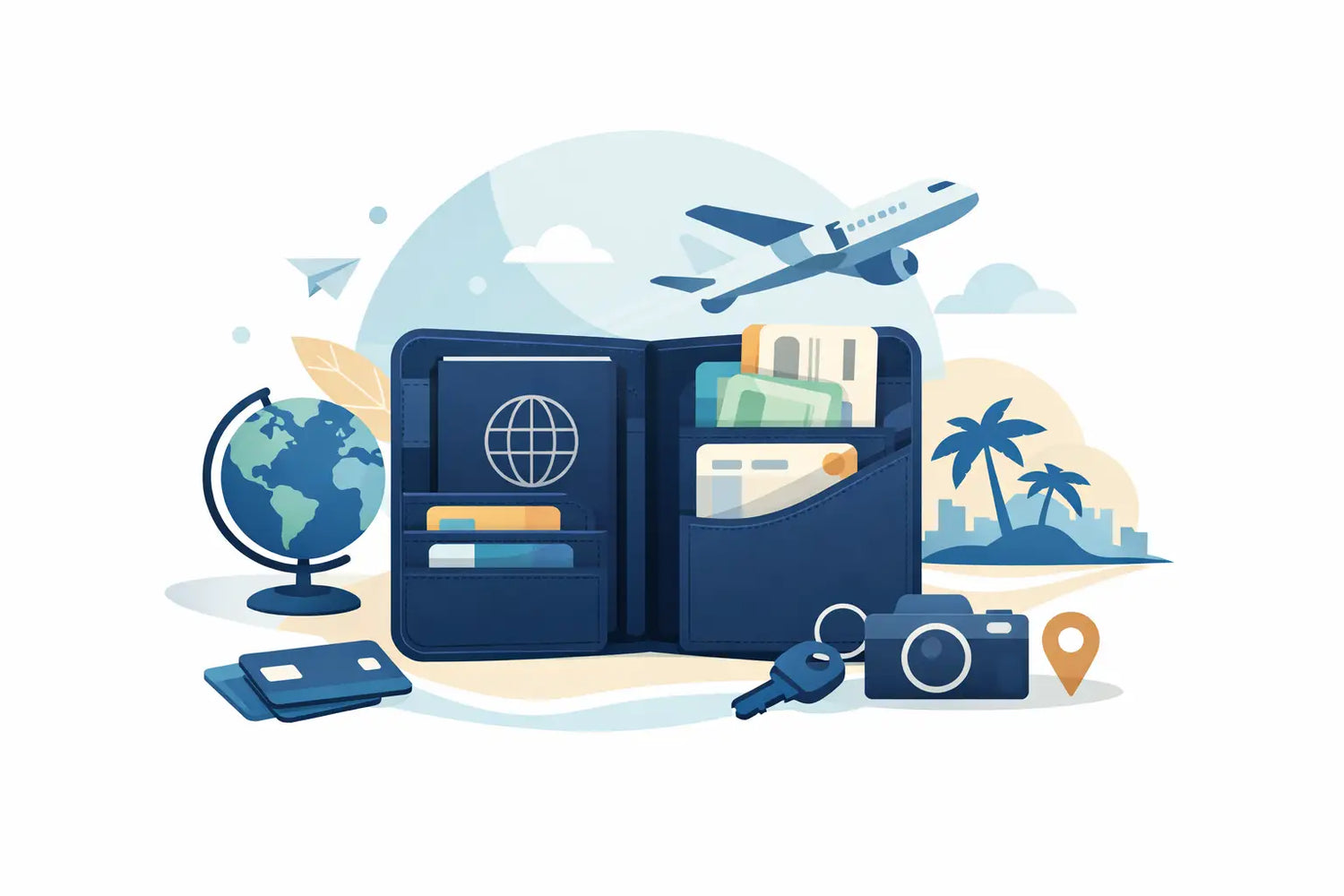
Airport stress usually starts before security. It starts when your passport is in one pocket, your boarding pass is folded into another, and your card wallet has somehow become a second travel bag. This guide to passport wallet features is for travelers who want less bulk, faster access, and a cleaner way to carry the essentials.
A good passport wallet is not just a larger wallet with a travel label on it. The best ones solve a specific problem: they keep your documents, payment cards, cash, and small travel tools organized without turning into a brick in your jacket or bag. That balance matters more than any single feature on its own.
The best guide to passport wallet features starts with size
Most people shop for capacity first. That makes sense, but slimness is what determines whether you will actually use the wallet every day. A passport wallet can hold everything you need and still fail if it feels bulky in your pocket or awkward in your hand.
The smart question is not, "How much can it carry?" It is, "How much can it carry without getting fat?" A well-designed passport wallet should fit a passport, a few cards, folded cash, and key travel extras while staying compact enough for everyday carry. If it only works at the airport and gets left behind the rest of the trip, it is not doing enough.
This is where layout matters more than raw dimensions. A slimmer profile often comes from efficient slot placement, tighter construction, and avoiding wasted interior space. Two wallets can have the same outer size, but the one with better internal design will feel much more refined in use.
Storage should match how you actually travel
Capacity sounds impressive in product descriptions, but it only matters if the storage is useful. Think in terms of what you reach for most often.
A strong passport wallet usually includes a dedicated passport sleeve that holds the booklet securely without making insertion a struggle. It should also have card slots that grip firmly enough to keep cards in place, but not so tightly that pulling one out at a checkout feels clumsy. Cash storage matters too, especially if you travel internationally and still carry local currency. Folded bills should sit neatly without creating thick pressure points.
Some travelers need room for one passport and two or three cards. Others want a true all-in-one carry with multiple cards, cash, boarding passes, and backup travel items. Neither setup is better. It depends on whether you are packing light for a weekend or moving through airports often enough to justify a more capable layout.
What matters is avoiding dead weight. If a wallet has a dozen card slots you will never use, that extra structure adds bulk. If it skips a boarding pass pocket and you fly often, you will feel that omission immediately.
Look for purpose-built travel storage
The most useful travel wallets go beyond the obvious. Dedicated space for SIM cards can save time when you land. A SIM ejector pin slot is a small detail, but one of those details that becomes very valuable the moment you need it. A mini pen holder also earns its place if you ever fill out forms in transit or jot down reservation details.
These features sound small because they are small. That is exactly why they matter. Travel friction often comes from tiny items with no proper home.
Access speed is a real feature
A passport wallet should not only store your essentials. It should let you reach them quickly under pressure.
Think about where you use it: check-in counters, security lines, immigration desks, taxis, hotel receptions, and coffee shops between flights. In those moments, the best wallet is the one that lets you grab the right item without fumbling or opening three compartments.
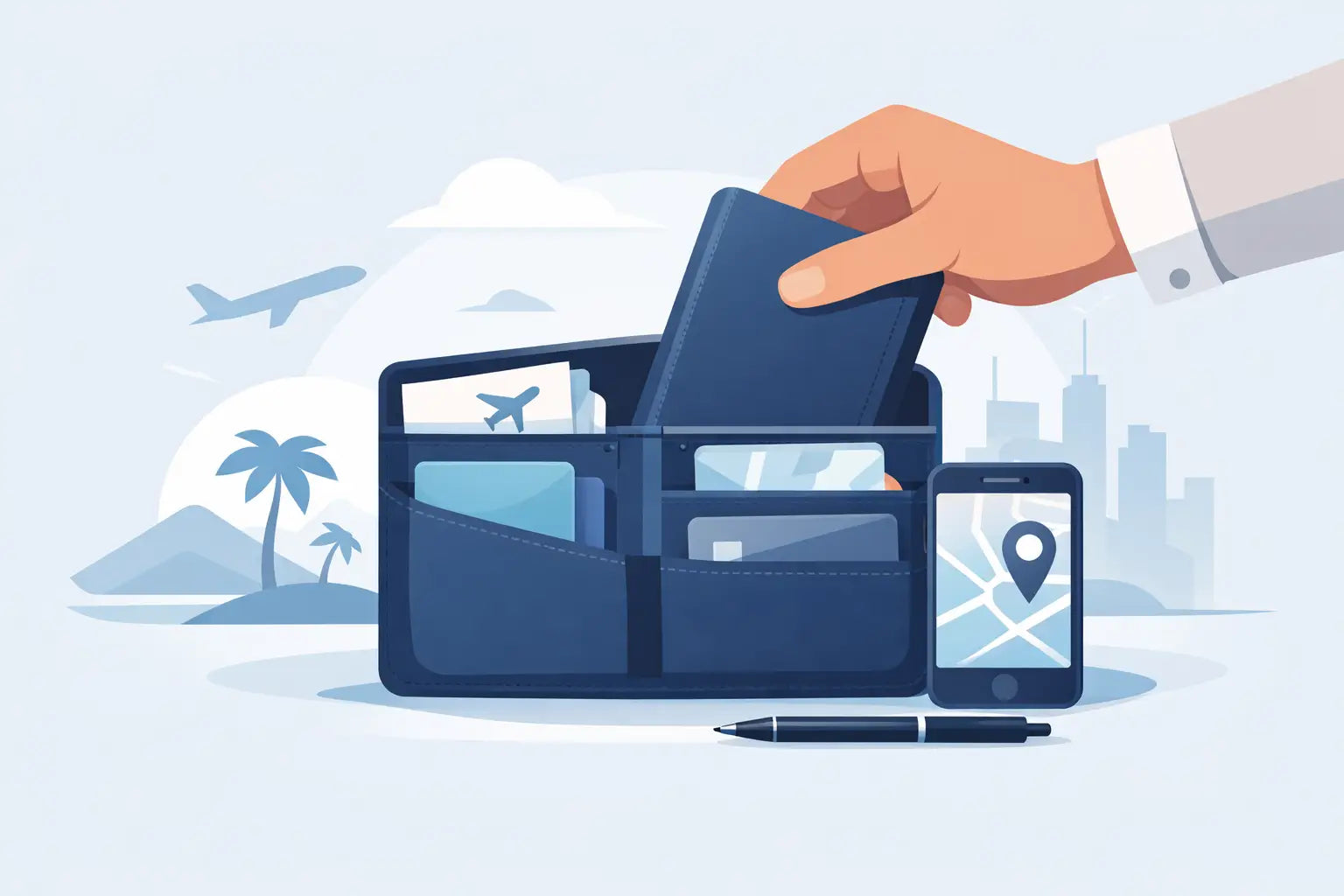
Fast access comes down to intuitive placement. Your passport should be easy to slide out. Your primary card should not sit behind three other layers. Your boarding pass should fit without awkward folding if that is part of your routine. If you need two hands and ten seconds every time you open the wallet, the design is working against you.
This is also where overbuilt travel organizers fall short. They may hold more, but they often create too many sections, too much folding, and too much visual clutter. For most travelers, cleaner organization beats maximum complexity.
Materials affect both feel and longevity
A passport wallet lives in high-contact conditions. It gets handled at airports, stuffed into bags, pressed into pockets, and opened constantly. Material choice is not cosmetic. It shapes durability, flexibility, and how premium the wallet feels over time.
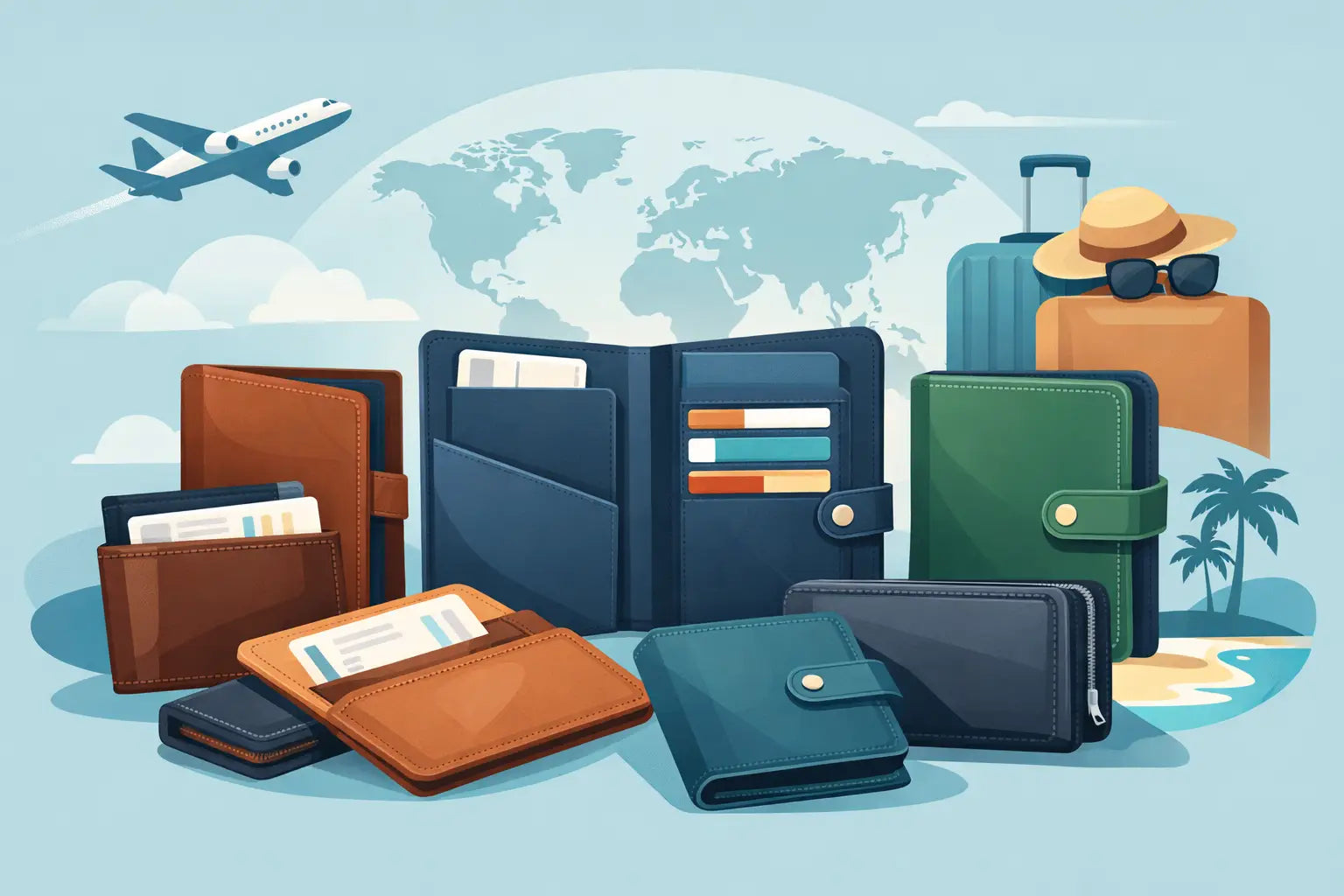
Leather remains a strong choice when it is done well. It offers a polished look, soft hand feel, and the ability to age with character rather than simply wearing out. Cow Nappa leather, for example, stands out for its smooth texture and supple finish, which helps a slim wallet stay elegant instead of stiff.
That said, material quality is only half the story. Construction matters just as much. Clean stitching, tidy edges, and a structure that stays slim under load are signs of a wallet built for repeated use. Cheap materials can look fine on day one, but they tend to show stress fast, especially around folds and slots.
If you travel often, choose a material that feels good in the hand and holds its shape under real use. A premium wallet should still feel composed after months of flights, not tired and warped.
Security features matter, but not all of them equally
Security is one of the most talked-about parts of any guide to passport wallet features, and for good reason. But this is an area where marketing can get louder than practical value.
RFID blocking gets a lot of attention. Some travelers specifically want it for added peace of mind, especially in busy transit hubs. It can be a worthwhile feature, but it should not distract from the basics. Physical security still matters more day to day: snug card slots, a passport compartment that keeps the booklet from sliding, and a format that stays close to your body instead of floating around in a large bag.
Closures are another trade-off. Zippers can add security, but they also add bulk and can slow access. Open designs are quicker and cleaner, but they depend more heavily on smart slot tension and good construction. There is no universal winner here. If you prioritize speed and pocketability, a well-structured open wallet may be the better choice. If you carry more loose items, a closure might be worth the added thickness.
Everyday carry matters as much as travel use
One of the easiest ways to judge a passport wallet is to ask whether you would want to carry it when you are not flying. If the answer is no, it may be too specialized.
The strongest designs work beyond the airport. They function as a daily wallet with enough room for cards and cash, while still keeping your passport and travel tools ready when needed. That makes them especially useful for frequent travelers, hybrid workers, and anyone who moves between normal routines and short trips without wanting to switch wallets each time.
This is where minimalist design really earns its place. A compact format reduces pocket bulk, looks sharper, and makes the wallet feel less like travel gear and more like part of your regular carry. WhimHold is built around that exact idea: big on usable space, slim where it counts.
Small details make a big difference
A passport wallet is a product of small decisions. The angle of a card slot changes how quickly you can pull a card. The depth of a passport sleeve affects security and ease of access. The placement of a cash compartment determines whether bills stay flat or bunch up.
Even pen storage can be make-or-break for some travelers. A mini pen is easy to overlook until you need it on arrival, and then it suddenly feels essential. The same goes for SIM storage. If you switch networks while traveling, dedicated slots save you from carrying tiny plastic pieces in random pockets.
These are not flashy features, and that is the point. Good design tends to disappear into the experience. You notice it less because everything works.
What to prioritize before you buy
If you are choosing between passport wallets, start with your non-negotiables. For some travelers, that means the slimmest profile possible. For others, it means carrying a passport, multiple cards, cash, and a few travel tools in one place.
Then look at how the wallet balances three things: capacity, access, and pocketability. Most wallets are strong in one or two and weaker in the third. The best option is usually the one that fits your real routine rather than the one with the longest feature list.
A sleek wallet with smart storage often beats a larger one with extra compartments you will never touch. And if premium materials, compact construction, and practical organization all show up together, that is usually where long-term value lives.
The right passport wallet should make travel feel lighter before you even leave home. Choose one that carries what matters, stays slim under pressure, and earns its spot in your pocket long after the boarding pass is gone.

Leave a comment
This site is protected by hCaptcha and the hCaptcha Privacy Policy and Terms of Service apply.